9 Essential Elements for a Winning Cafe Concept Design
Picture this: you walk into a cafe and immediately feel at home. The lighting is perfect, the seating invites you to stay, and every corner seems designed for your Instagram feed. That’s not an accident—it’s the result of masterful cafe concept design. In 2026, creating a successful cafe goes far beyond serving great coffee; it’s about crafting an experience-driven space that becomes a customer’s “third place” between home and work.
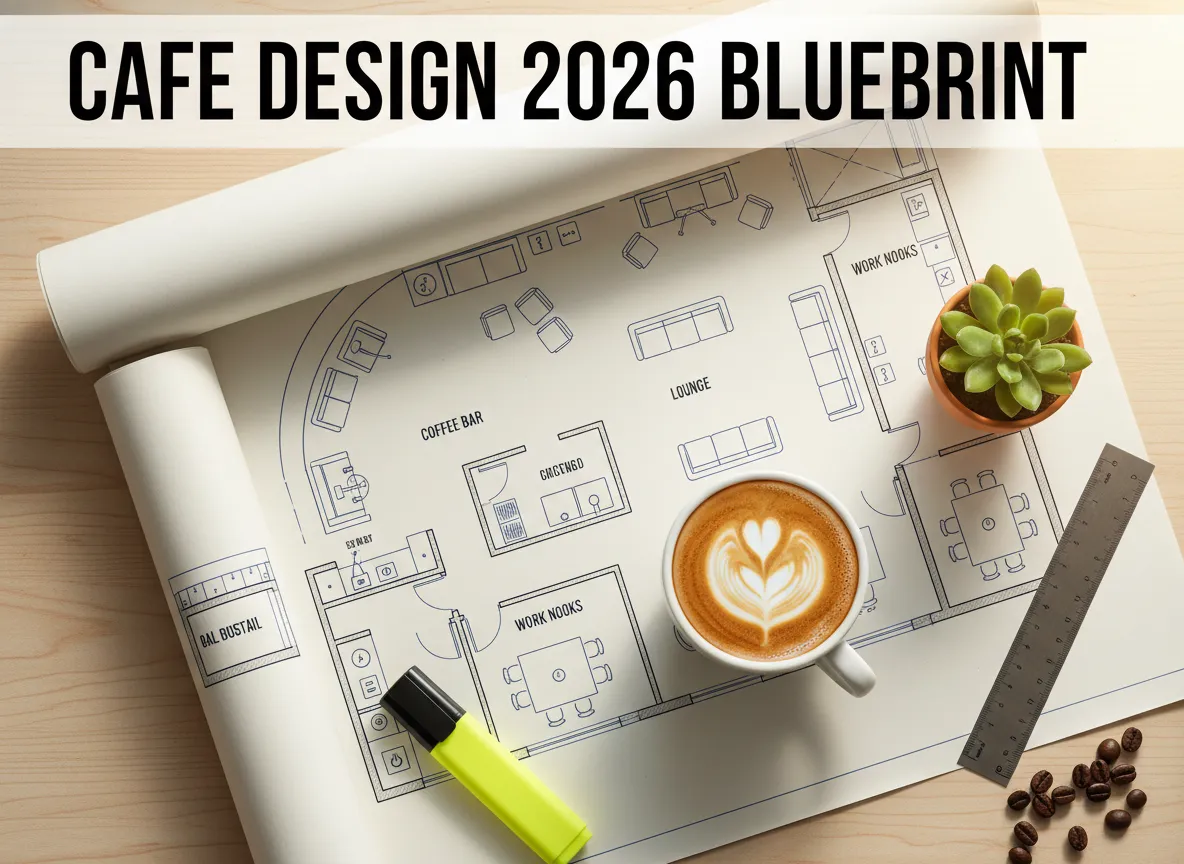
The 9 Essential Elements for a Winning Cafe Concept Design have evolved dramatically from the traditional “grab coffee and go” model. Today’s most successful cafes understand that customers crave connection, comfort, and shareability. With 35% of specialty coffee drinkers consuming coffee out-of-home, your cafe design can make or break your business success [5].
Key Takeaways
- Experience over transactions: Modern cafes prioritize creating memorable experiences through flexible, modular layouts and intentional design choices
- “Third place” positioning: Successful cafes serve as cultural gathering spaces with multi-sensory experiences that encourage customers to linger
- Instagram-worthy aesthetics: Design choices should create visually distinctive environments that customers want to photograph and share
- Flexible functionality: Spaces must adapt throughout the day—from morning coffee service to afternoon co-working to evening social hub
- Intentional flow and seating: Strategic layout design with adult-friendly seating throughout the space, not just at perimeters
Understanding Modern Cafe Design Philosophy
Before diving into the 9 Essential Elements for a Winning Cafe Concept Design, it’s crucial to understand how cafe culture has transformed. Gone are the days when cafes simply needed good coffee and basic seating. Today’s customers seek experiential spaces that serve multiple functions throughout the day [2].
The most successful cafe concepts in 2026 embrace what designers call “flexible hospitality“—spaces that seamlessly transition from morning coffee rush to afternoon co-working hub to evening social gathering place. This evolution requires careful consideration of every design element, from furniture selection to lighting systems.
The Rise of the “Third Place” Cafe
Modern cafes function as “third places”—community gathering spaces that exist between home and work. This positioning requires design elements that support various activities: solo work sessions, casual meetings, social gatherings, and cultural events [5]. The most successful cafes treat their physical space as part of their product offering, creating environments that customers genuinely want to spend time in.
The Complete Guide to Essential Cafe Design Elements
1. Flexible, Modular Layout Design
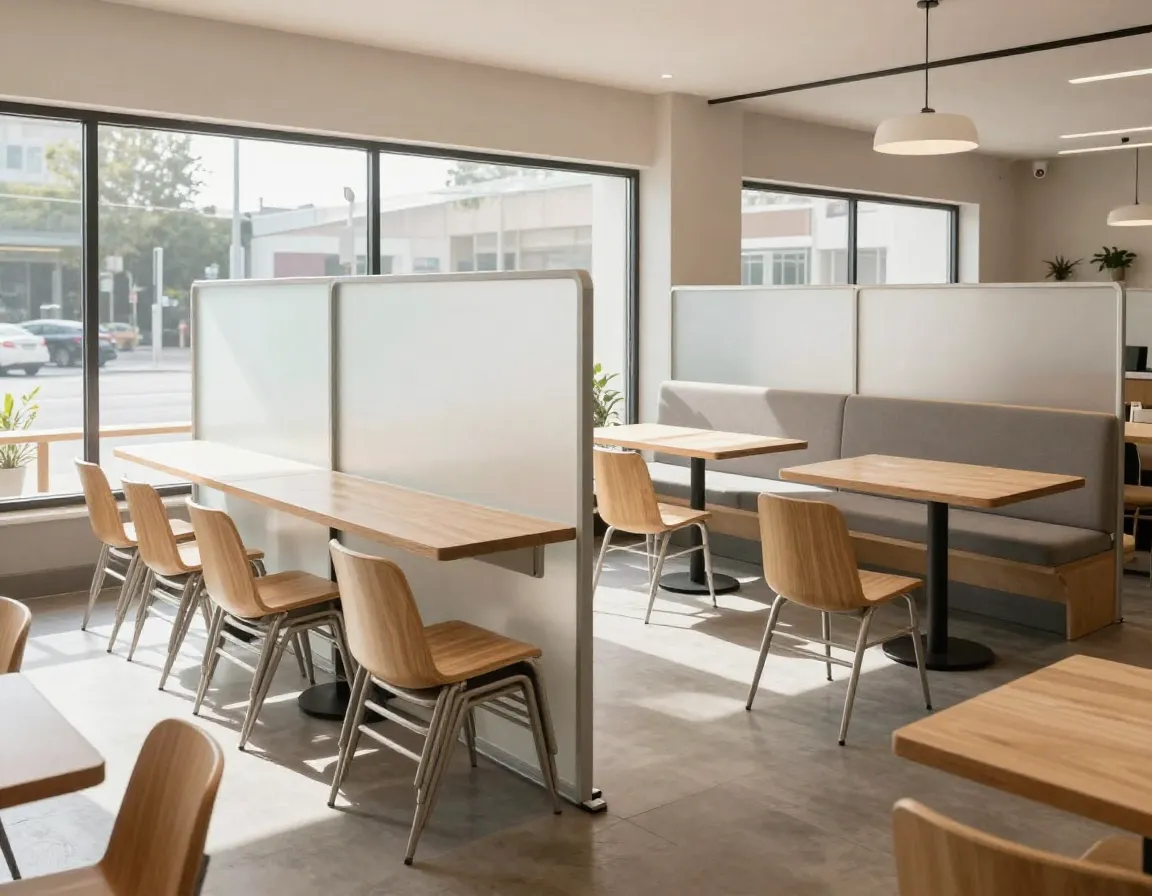
Modular furniture systems represent the foundation of successful modern cafe design. Unlike traditional fixed layouts, winning cafe concepts prioritize adaptability through moveable partitions, stackable seating, and multi-functional furniture pieces [2].
I’ve observed that the highest-performing cafes can transform their spaces throughout the day. Morning coffee service areas become afternoon co-working zones, which then convert to evening wine bar settings. This flexibility requires:
- Lightweight, stackable chairs that staff can easily rearrange
- Mobile partition systems for creating intimate spaces or opening up for events
- Multi-height tables that work for both standing meetings and seated work sessions
- Modular banquette seating with removable cushions and adjustable configurations
The key is designing your space with intentional flexibility rather than hoping customers will adapt to rigid layouts. Successful cafes plan for at least three different daily configurations.
2. Strategic Seating Arrangements and Flow
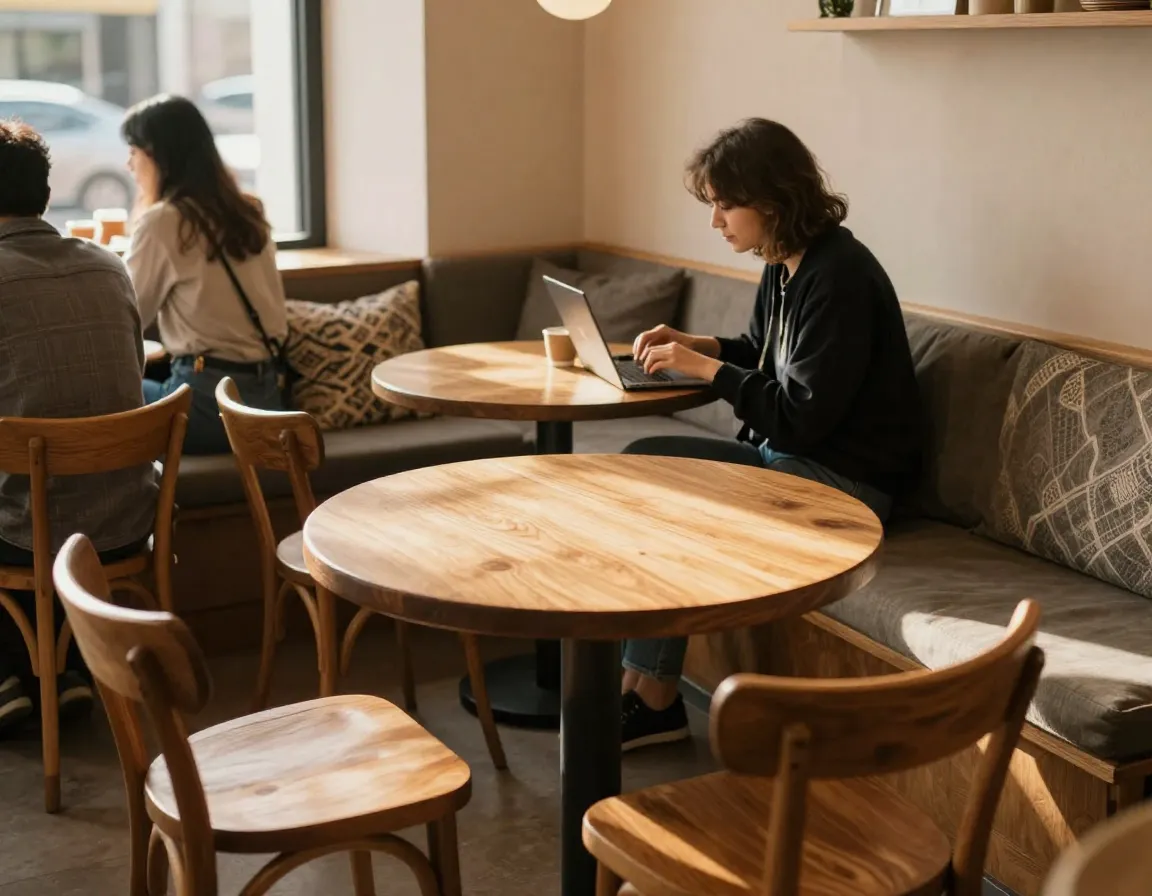
Intentional seating design goes far beyond simply filling your space with tables and chairs. The highest-performing cafes integrate adult-friendly seating throughout the entire space, not just relegated to perimeters [1][4].
Modern cafe seating strategy includes:
Round Tables for Connection 🪑
Round tables, preferably in wood or marble finishes, create more welcoming environments than rectangular designs. They soften hard edges and encourage conversation [1]. Position these strategically near windows or in naturally lit areas.
Banquette Seating for Intimacy
Built-in banquette seating creates intimate gathering nooks that customers gravitate toward. These areas work particularly well for:
- Date conversations
- Small group meetings
- Solo work sessions with back support
- Instagram-worthy photo opportunities
Flow and Sightlines
Design your layout with clear sightlines throughout the space. Customers should be able to see available seating options without wandering aimlessly. Create natural pathways that guide traffic flow without creating bottlenecks during busy periods.
3. Integrated Coffee Stations as Design Focal Points
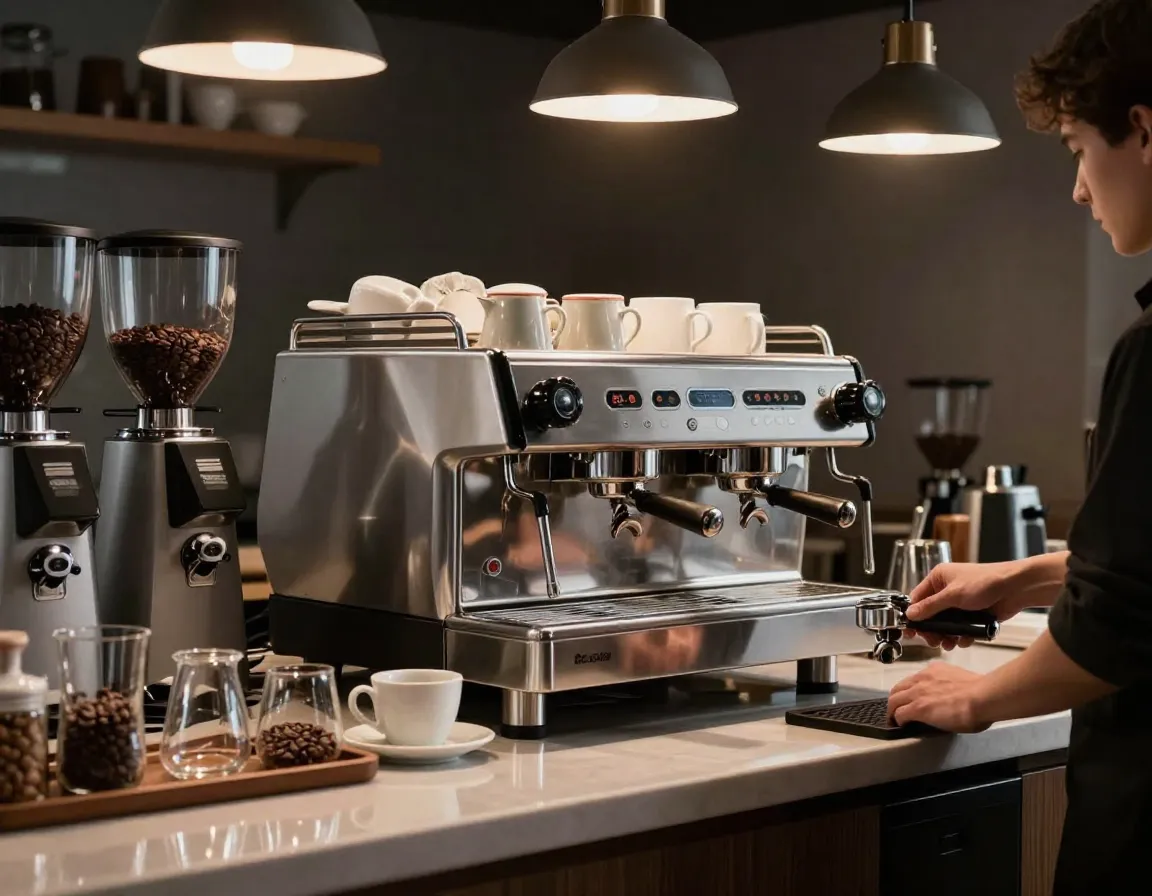
Your coffee preparation area should function as both operational workspace and visual centerpiece. Modern cafe design treats the coffee station as living theater where customers can observe the craft of coffee making [1].
Essential coffee station design elements include:
- Beautiful espresso machines positioned for customer visibility
- Elegant storage canisters for coffee beans and brewing supplies
- Specialty glassware and serving pieces that double as decorative elements
- Proper lighting that highlights the coffee preparation process
- Clean, organized workflow that demonstrates professionalism
The coffee station becomes a conversation starter and helps justify premium pricing by showcasing the craftsmanship behind each drink.
4. Lighting Design for Multiple Moods
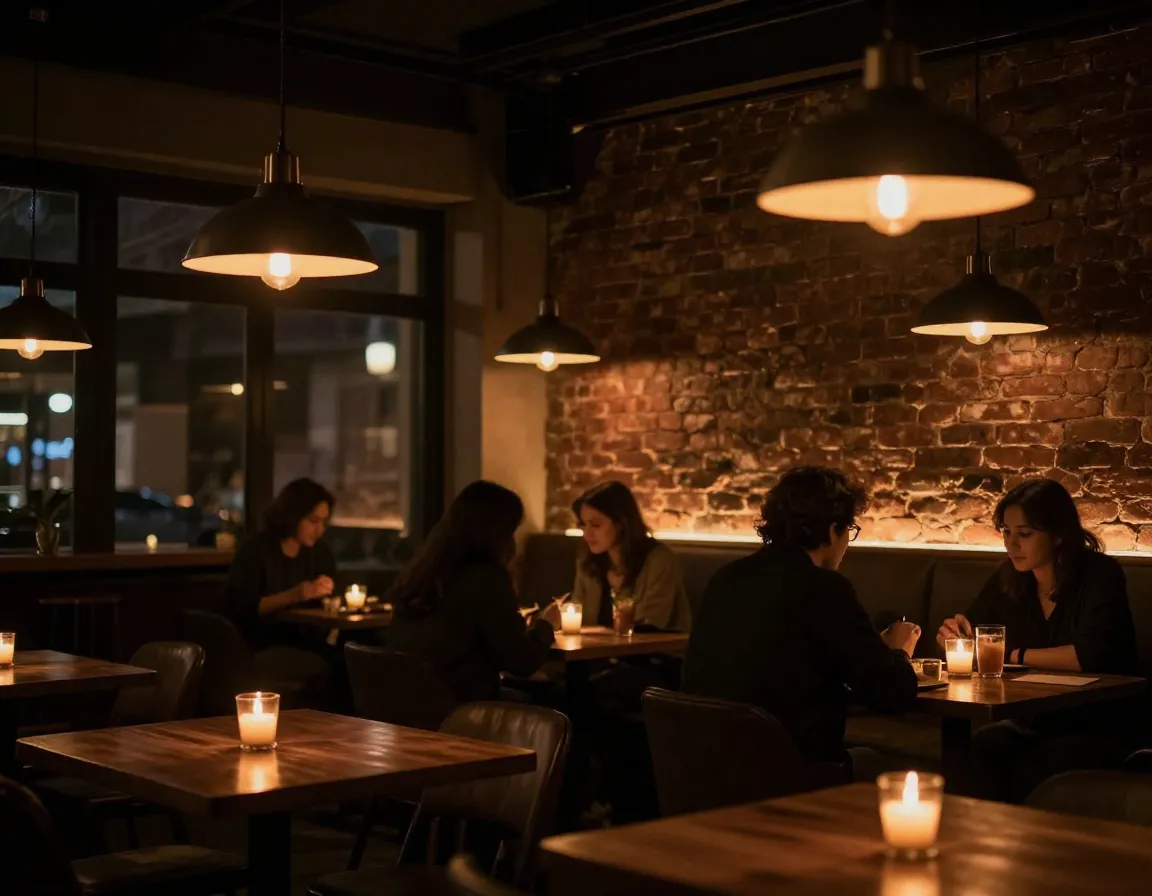
Layered lighting systems allow your cafe to adapt its ambiance throughout the day. Successful cafe lighting design includes multiple zones and adjustable intensity levels [6].
Morning Lighting Strategy
Bright, energizing lighting supports the morning coffee rush and helps customers feel alert. Use:
- Natural light maximization through large windows
- Clean, bright overhead lighting
- Task lighting at ordering areas
Afternoon Ambiance
Softer, warmer lighting encourages lingering and supports co-working activities:
- Dimmable overhead systems
- Table lamps for task lighting
- Accent lighting on design features
Evening Atmosphere
Intimate, warm lighting transforms your space into a social gathering place:
- Pendant lights over seating areas
- Candles or battery-operated alternatives
- Accent lighting that highlights architectural features
5. Instagram-Worthy Design Features
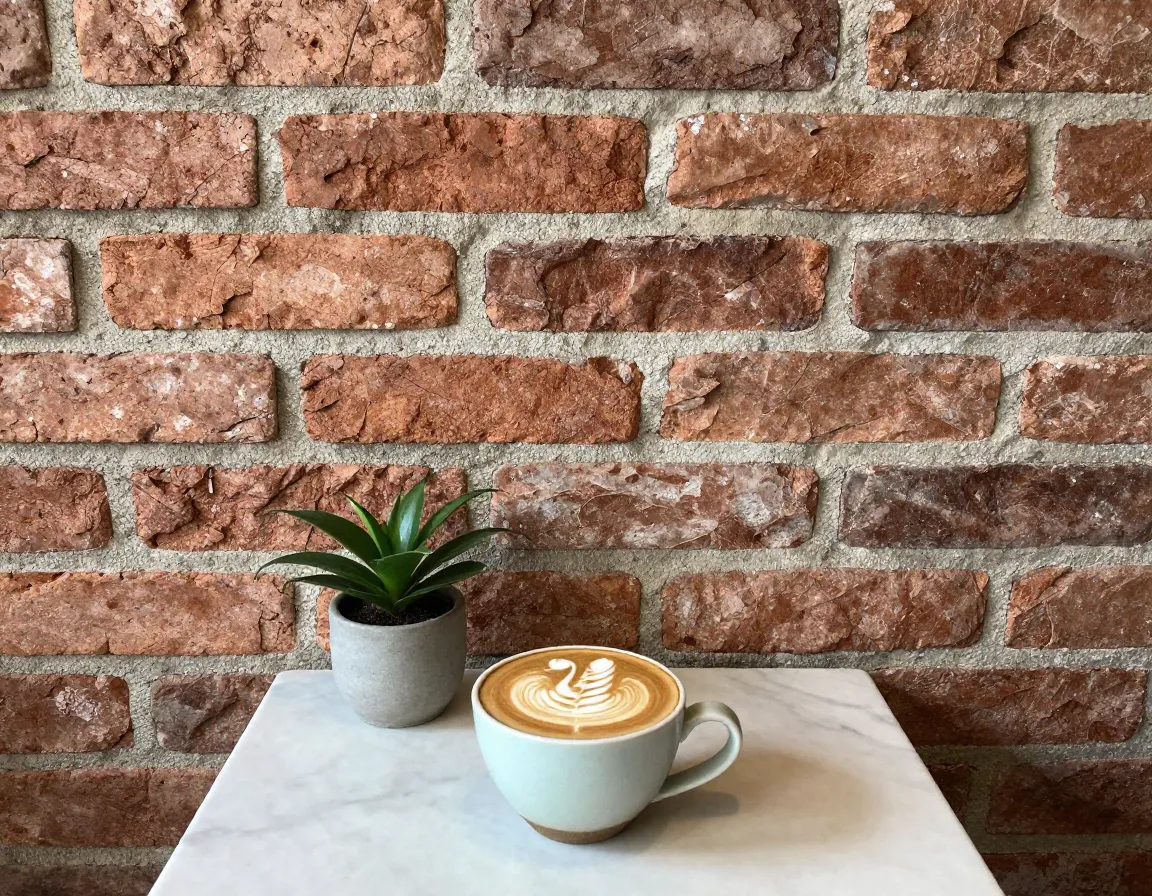
In 2026, cafes increasingly treat their space as part of the product, creating visually distinctive environments that customers feel compelled to photograph and share [3]. This isn’t about gimmicky photo walls—it’s about thoughtful design choices that create natural sharing moments.
Design Elements That Encourage Sharing:
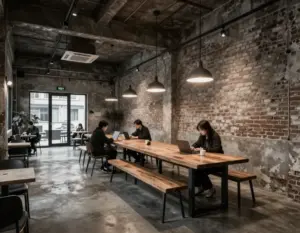
- Unique architectural features like exposed brick, interesting ceiling treatments, or custom millwork
- Beautiful food presentation areas with proper lighting for photography
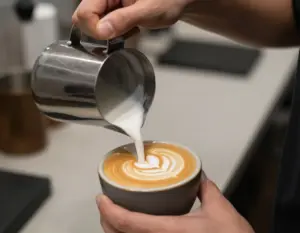
- Artistic coffee displays featuring latte art, specialty drinks, or brewing equipment
- Natural elements like living walls, interesting plants, or water features
- Custom branding elements that reinforce your cafe’s personality
The goal is creating an environment where customers naturally want to document their experience, not forced photo opportunities that feel contrived.
6. Multi-Functional Event Spaces
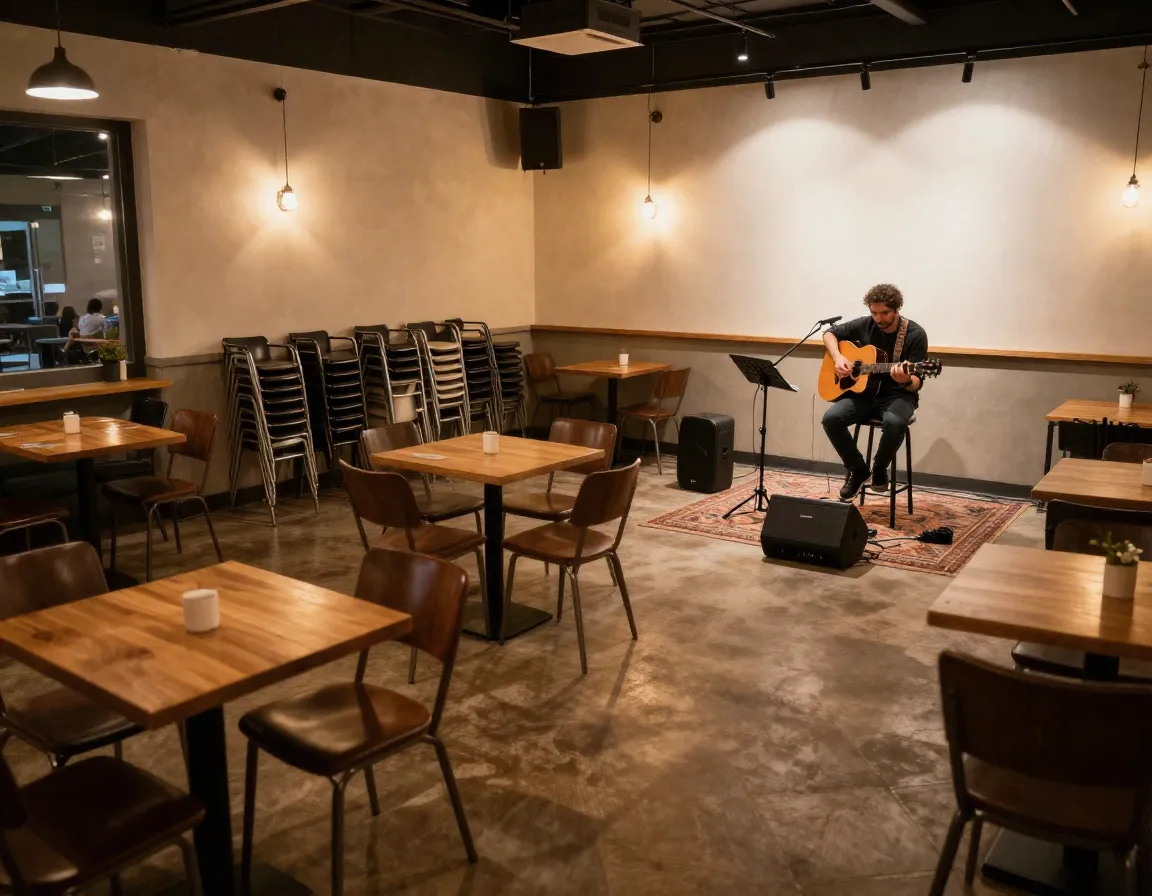
Experience-driven spaces that host events, workshops, and community gatherings significantly outperform transaction-focused cafes [2]. Design your space to accommodate various programming:
Event-Ready Features:
- Moveable furniture for quick space reconfiguration
- Audio/visual capabilities for presentations or live music
- Proper acoustics that support both intimate conversation and larger gatherings
- Storage solutions for event supplies and equipment
- Flexible lighting that adapts to different event types
Popular cafe programming includes:
- Board game nights
- Book clubs and author readings
- Live acoustic music
- Art exhibitions
- Business networking events
- Workshops and classes
7. Acoustic Design for Comfort
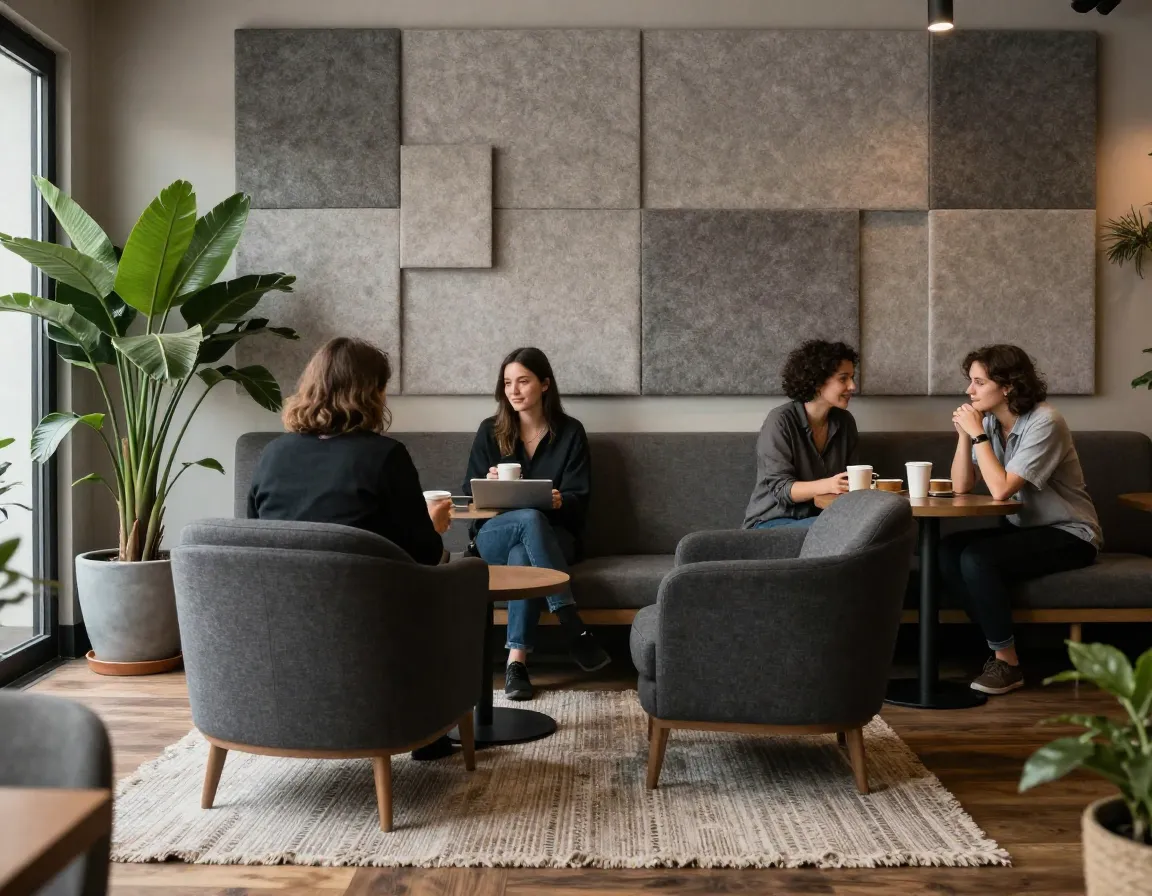
Sound management often gets overlooked in cafe design, but it’s crucial for creating comfortable environments. Poor acoustics can drive customers away regardless of how beautiful your space looks [7].
Acoustic Solutions:
- Soft furnishings like upholstered seating, curtains, and rugs
- Sound-absorbing materials on walls and ceilings
- Strategic music systems with zone control
- Natural sound barriers using plants or decorative screens
- Proper spacing between seating areas
The goal is creating an environment where customers can have conversations without shouting, but that still maintains energy and vibrancy.
8. Biophilic Design Elements
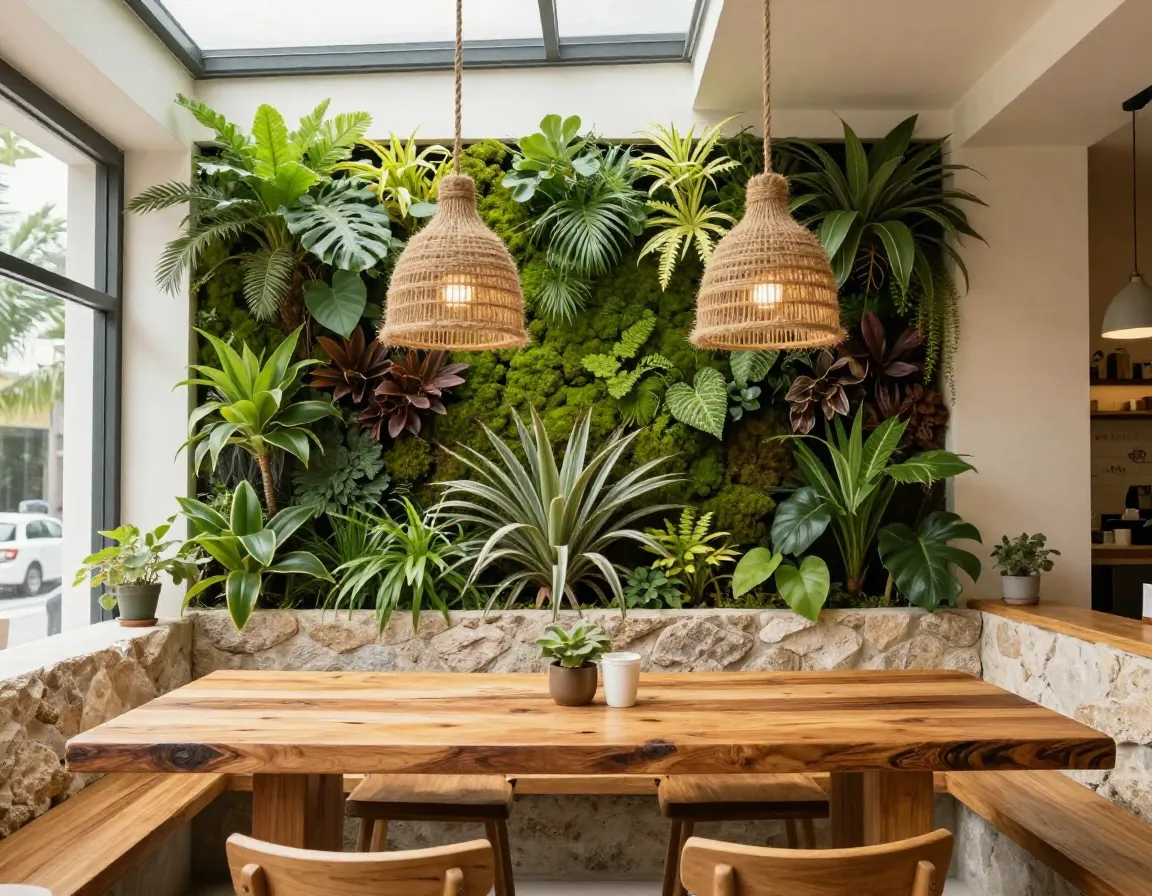
Natural elements significantly improve customer comfort and dwell time. Biophilic design principles help create calming, restorative environments that encourage customers to linger [8].
Natural Design Integration:
- Living plants strategically placed throughout the space
- Natural materials like wood, stone, and natural fibers
- Natural light maximization through window treatments and layout
- Water features for ambient sound and visual interest
- Natural color palettes inspired by outdoor environments
These elements work particularly well in creating the “third place” atmosphere that modern customers seek.
9. Technology Integration and Connectivity
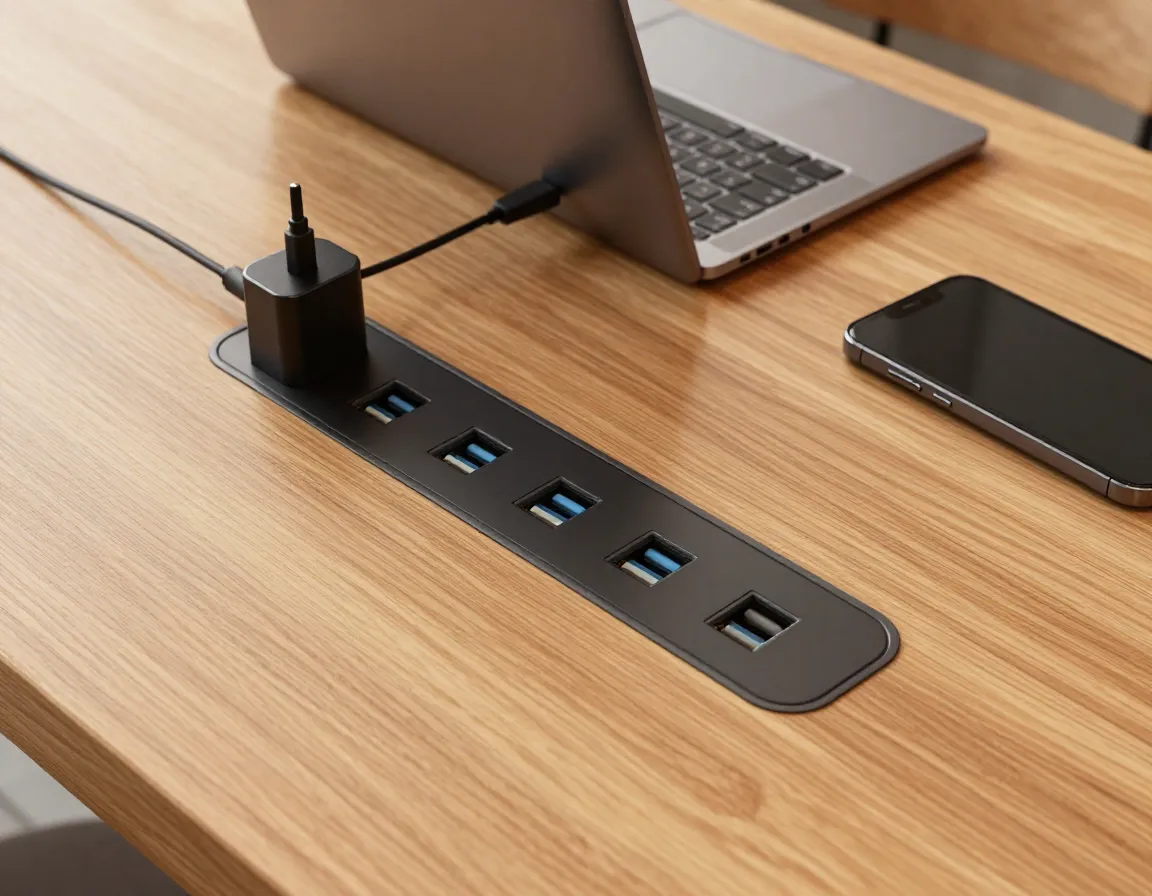
Seamless technology integration supports the modern customer’s need to work, connect, and share while in your space [6]. However, technology should enhance rather than dominate the design.
Essential Technology Features:
- Reliable, fast WiFi throughout the entire space
- Accessible power outlets at every seating area
- USB charging stations built into furniture
- Mobile ordering systems that reduce wait times
- Social media integration for easy sharing and check-ins
Technology Design Principles:
- Hide cables and technical equipment
- Choose sleek, minimal hardware
- Ensure technology doesn’t interfere with the aesthetic
- Make connectivity effortless for customers
- Plan for future technology upgrades
Bringing Together the 9 Essential Elements for a Winning Cafe Concept Design
Successfully implementing these 9 Essential Elements for a Winning Cafe Concept Design requires careful coordination and planning. Each element should support and enhance the others, creating a cohesive experience that feels intentional rather than accidental.
Design Integration Strategies
Start with Your Customer Journey
Map out how customers will move through and use your space throughout the day. Consider:
- Entry and ordering experience
- Seating selection process
- Work and social activities
- Photo and sharing opportunities
- Exit and return likelihood
Create Design Zones
Successful cafes typically include multiple zones:
- High-energy social areas near the entrance and coffee station
- Quiet work zones with task lighting and power access
- Intimate conversation areas with comfortable seating
- Event/flexible spaces that can adapt for programming
Plan for Operational Efficiency
Beautiful design means nothing if your staff can’t operate efficiently. Ensure your layout supports:
- Smooth workflow between preparation and service areas
- Easy cleaning and maintenance access
- Safe traffic patterns during busy periods
- Storage solutions that don’t compromise aesthetics
Implementation Timeline and Budget Considerations
Phased Implementation Approach
You don’t need to implement all 9 Essential Elements for a Winning Cafe Concept Design simultaneously. Consider a phased approach that allows you to test and refine each element:
Phase 1: Foundation Elements (Months 1-2)
- Layout and seating arrangements
- Basic lighting systems
- Coffee station design
Phase 2: Experience Enhancement (Months 3-4)
- Acoustic improvements
- Technology integration
- Biophilic design elements
Phase 3: Community Building (Months 5-6)
- Event space capabilities
- Instagram-worthy features
- Advanced lighting and ambiance systems
Budget Allocation Guidelines
High-Impact, Lower-Cost Elements:
- Modular furniture selection (15-20% of budget)
- Strategic lighting improvements (10-15% of budget)
- Biophilic design elements (5-10% of budget)
Medium Investment Elements:
- Coffee station design and equipment (25-30% of budget)
- Acoustic treatments (10-15% of budget)
- Technology infrastructure (10-15% of budget)
Higher Investment Elements:
- Major layout modifications (20-25% of budget)
- Custom millwork and built-ins (15-20% of budget)
- Advanced audio/visual systems (5-10% of budget)
Measuring Success and Continuous Improvement
Key Performance Indicators
Track these metrics to evaluate the success of your 9 Essential Elements for a Winning Cafe Concept Design:
Customer Behavior Metrics:
- Average dwell time per customer
- Repeat visit frequency
- Peak hour capacity utilization
- Social media mentions and photo shares
Financial Performance Indicators:
- Revenue per square foot
- Average transaction value
- Labor efficiency ratios
- Event and programming revenue
Operational Metrics:
- Customer satisfaction scores
- Staff efficiency ratings
- Maintenance and cleaning costs
- Energy consumption patterns
Continuous Optimization
Successful cafe design is an ongoing process. Plan for regular assessment and refinement:
Monthly Reviews:
- Customer feedback collection
- Staff operational input
- Financial performance analysis
- Social media engagement tracking
Quarterly Adjustments:
- Furniture arrangement optimization
- Lighting and ambiance tweaks
- Menu and programming alignment
- Technology updates and improvements
Annual Evaluations:
- Major design element assessment
- Customer demographic analysis
- Competitive landscape review
- Strategic planning for improvements
Conclusion
The 9 Essential Elements for a Winning Cafe Concept Design represent a fundamental shift from traditional coffee shop thinking to experience-driven hospitality. Success in 2026 requires creating spaces that serve as community gathering places, support diverse customer needs throughout the day, and provide Instagram-worthy experiences that customers want to share.
Remember that great cafe design isn’t about implementing every trend—it’s about thoughtfully selecting and integrating elements that support your specific brand vision and customer base. The most successful cafes create authentic environments that feel both intentional and welcoming.
Your Next Steps:
- Assess your current space against these nine essential elements
- Prioritize improvements based on your budget and customer feedback
- Create an implementation timeline that allows for testing and refinement
- Establish measurement systems to track the impact of design changes
- Plan for ongoing optimization as customer needs and preferences evolve
The investment in thoughtful cafe design pays dividends through increased customer loyalty, higher average transaction values, and word-of-mouth marketing that money can’t buy. Start with one or two elements that align with your immediate needs and budget, then build systematically toward a complete transformation.
Your cafe has the potential to become more than a coffee shop—it can become an essential part of your community’s daily rhythm. The 9 Essential Elements for a Winning Cafe Concept Design provide your roadmap to creating that meaningful, profitable connection with your customers.
References
[1] Cafe Core Design Trend – https://www.goodhousekeeping.com/home/decorating-ideas/a69881736/cafe-core-design-trend/
[2] Trends In The Cafe Brunch Industry For 2025 And 2026 – https://shopcrepenation.com/2025/09/08/trends-in-the-cafe-brunch-industry-for-2025-and-2026/
[3] 7 Cafe Predictions For 2026 What Cafe Owners Should Prepare For – https://www.drinkripples.com/blog/7-cafe-predictions-for-2026-what-cafe-owners-should-prepare-for/
[4] 2026 Play Cafe Trends – https://www.michelecaruana.com/blog/2026-play-cafe-trends
[5] Magazine Coffee Shop Trends 2026 How Coffee Culture Is Evolving In Cafes N 1143 – https://www.dallacorte.com/magazine-coffee-shop-trends-2026-how-coffee-culture-is-evolving-in-cafes-n-1143.html
[6] Top Restaurant Design Trends – https://www.webstaurantstore.com/blog/2374/top-restaurant-design-trends.html
[7] Coffee Shop Interior Design – https://sustain-home.com/coffee-shop-interior-design/
[8] Coffee Shop Decor Ideas – https://www.gotable.com/blog/coffee-shop-decor-ideas/