9 Commercial-Grade Coffee Machines for Industrial Use: The Ultimate Guide for High-Volume Operations
Picture this: It’s 7 AM on a Monday morning, and your office break room is flooded with caffeine-seeking employees. Your current coffee machine sputters, overheats, and produces inconsistent results that leave everyone frustrated. Sound familiar? You’re not alone in this daily struggle that countless businesses face when trying to meet high-volume coffee demands with inadequate equipment.
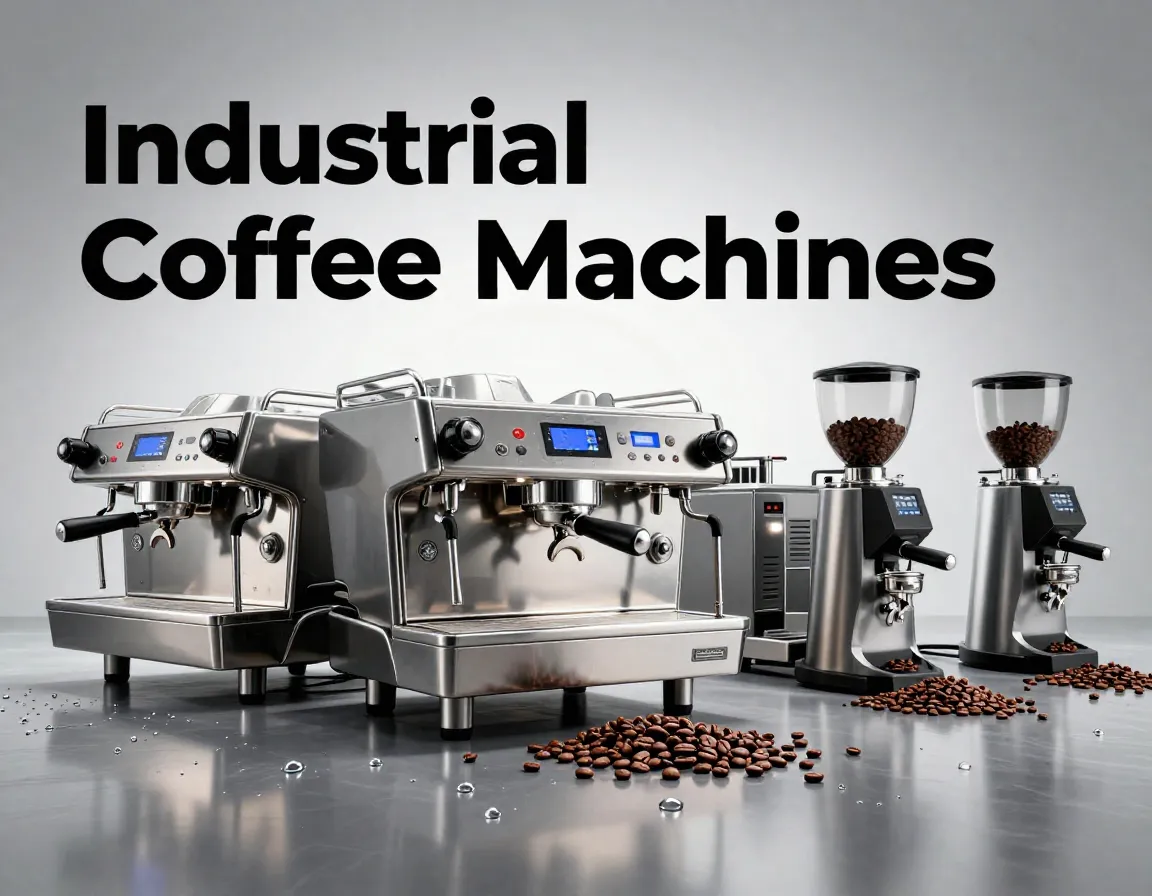
When it comes to 9 commercial-grade coffee machines for industrial use, choosing the right equipment can transform your workplace culture, boost employee satisfaction, and handle the demanding pace of modern business environments. Whether you’re outfitting a bustling corporate office, a high-traffic restaurant, or a busy hotel lobby, the right commercial coffee machine becomes the backbone of your daily operations.
Key Takeaways
- Volume capacity matters most: Match your machine’s daily output (150-600+ cups) to your specific business needs to avoid bottlenecks and equipment strain
- European brands dominate quality: La Marzocco, Rancilio, and Nuova Simonelli lead the market with superior engineering and temperature stability [2]
- Automation saves labor costs: Fully automatic machines handle grinding, tamping, and brewing with precision, ensuring consistent quality throughout busy periods [1]
- Dual-boiler systems are essential: Thermal stability prevents overheating during peak demand, maintaining coffee quality when you need it most [1]
- Market growth indicates strong ROI: The global fully automatic coffee machine market is expected to reach $51 billion by 2030, showing strong industry confidence [9]
Understanding Commercial Coffee Machine Categories
Before diving into our 9 commercial-grade coffee machines for industrial use, it’s crucial to understand how different machine types serve various business needs. The commercial coffee equipment landscape has evolved dramatically, with manufacturers focusing on automation, consistency, and volume capacity to meet growing market demands.
Volume-Based Machine Selection 📊
The foundation of choosing the right commercial coffee machine starts with understanding your daily volume requirements. Small cafes and mobile carts serving fewer than 150 cups daily can operate effectively with 1-2 group semi-automatic machines [2]. These compact units provide excellent control while maintaining manageable operational complexity.
Neighborhood cafes handling 150-300 cups benefit from 2-group commercial machines that balance efficiency with quality control [2]. This sweet spot allows for consistent service without overwhelming staff or compromising taste profiles.
For busy cafes and bakeries serving 300-600 cups daily, 3-group or automatic machines become essential [2]. These workhorses handle peak morning rushes while maintaining temperature stability throughout extended operating periods.
Chain stores and high-volume operations exceeding 600 cups require multi-group or super-automatic machines [2]. These industrial-grade units feature advanced automation, multiple brewing stations, and robust construction designed for continuous operation.
European vs. Emerging Market Options
European brands dominate the high-end commercial espresso machine segment, with La Marzocco, Rancilio, Nuova Simonelli, La Cimbali, and Sanremo recognized for their engineering heritage and exceptional temperature stability [2]. These manufacturers have decades of experience perfecting thermal dynamics, pressure systems, and build quality that justifies premium pricing.
However, Chinese manufacturers are rapidly emerging as competitive alternatives, offering cost efficiency, faster production cycles, OEM/ODM customization capability, and design innovation while meeting international certification standards [2]. This shift provides businesses with more options across different budget ranges without sacrificing essential performance features.
The Complete List: 9 Commercial-Grade Coffee Machines for Industrial Use
1. La Marzocco Strada EP – The Professional’s Choice
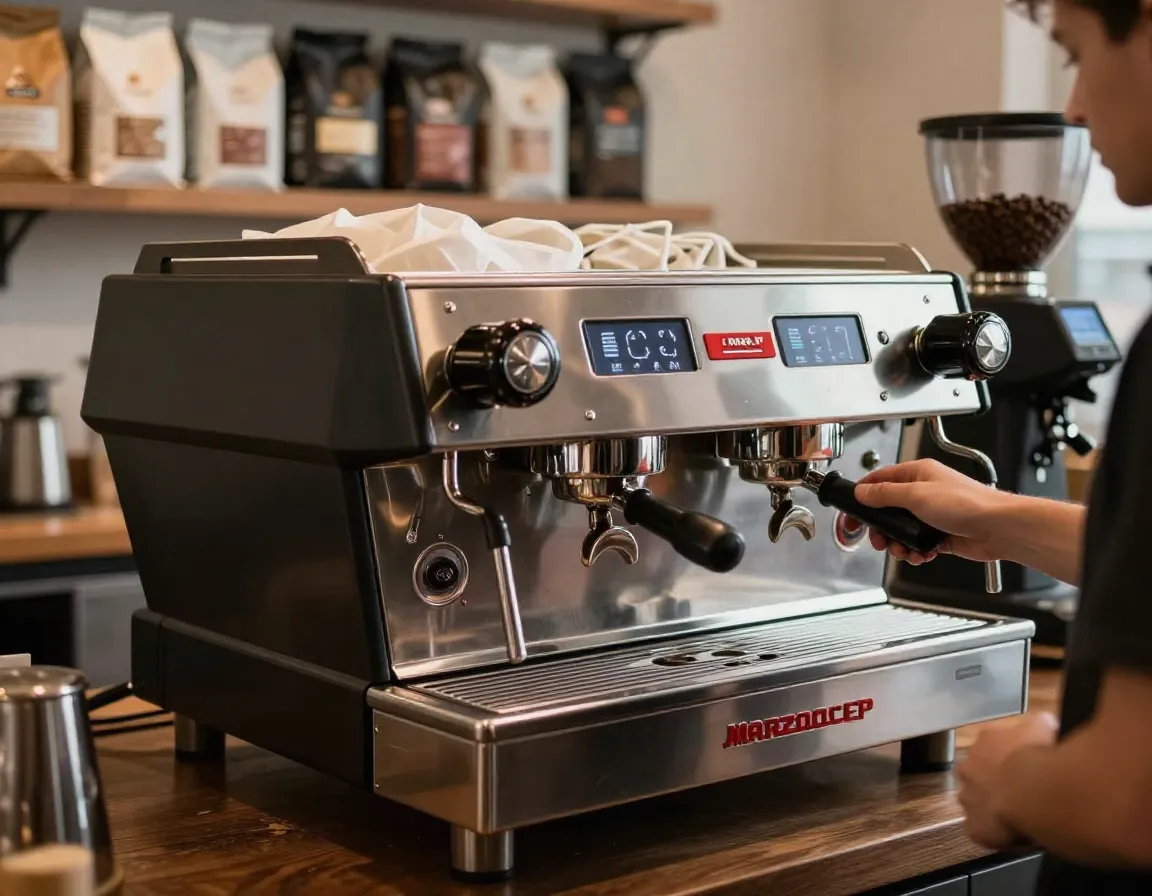
The La Marzocco Strada EP stands as the gold standard for high-volume, quality-focused coffee shops demanding precise control over every brewing parameter [3]. This machine features advanced brew pressure and temperature adjustability, allowing skilled baristas to extract optimal flavors from different coffee origins and roast profiles.
Key Features:
- Dual boiler system with independent temperature controls
- Programmable pre-infusion settings
- Commercial-grade group heads with thermal stability
- Stainless steel construction built for 24/7 operation
- Digital display for real-time monitoring
Best For: Specialty coffee shops, high-end restaurants, and establishments where coffee quality directly impacts brand reputation.
2. Jura Giga 10 – Compact Powerhouse
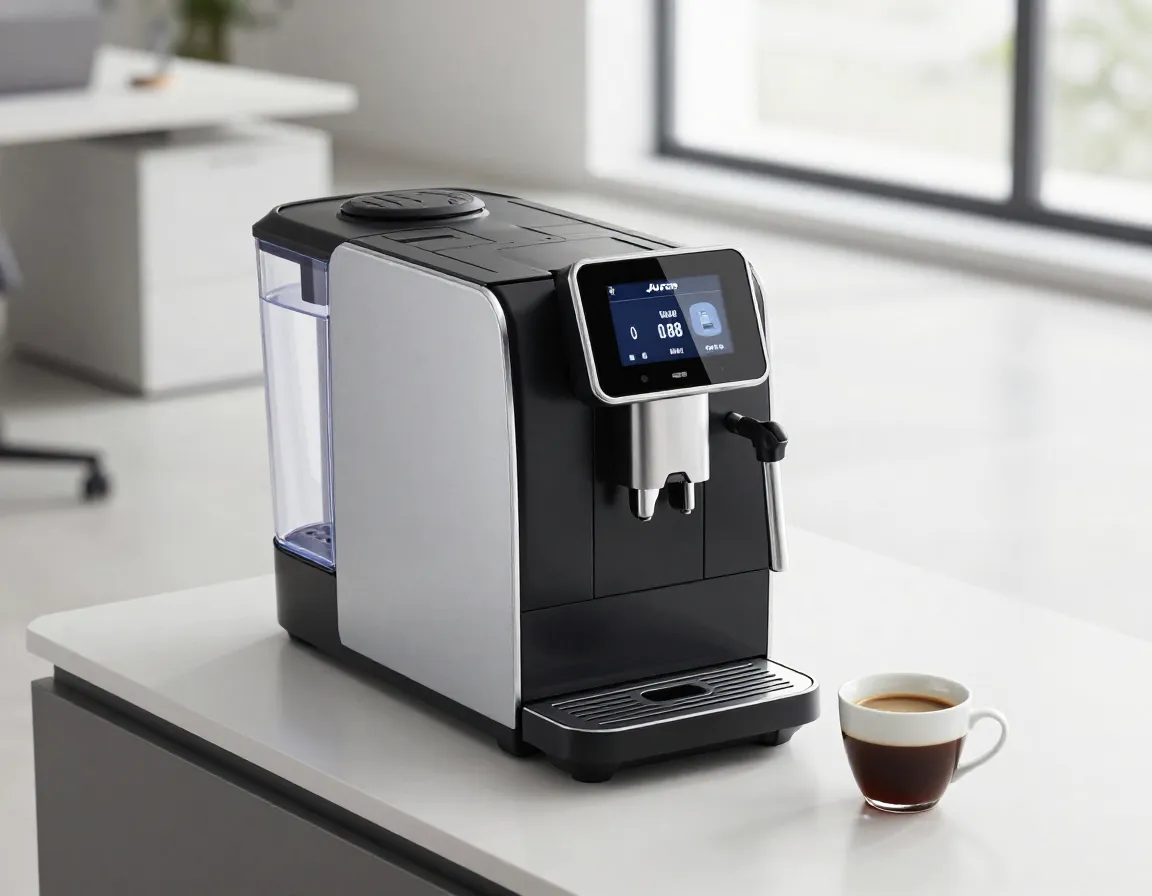
The Jura Giga 10 represents the pinnacle of super-automatic technology in a surprisingly compact footprint [3]. Despite its modern design and 0.88-liter water reservoir, this machine delivers professional-grade performance suitable for space-constrained environments without compromising output quality.
Key Features:
- Compact design perfect for small spaces
- Fully automatic operation with minimal training required
- Modern touchscreen interface
- Integrated grinding system with adjustable settings
- Easy maintenance protocols
Best For: Small offices, boutique hotels, executive lounges, and premium retail environments.
3. UNIC Tango Ace Superautomatic – High-Volume Champion
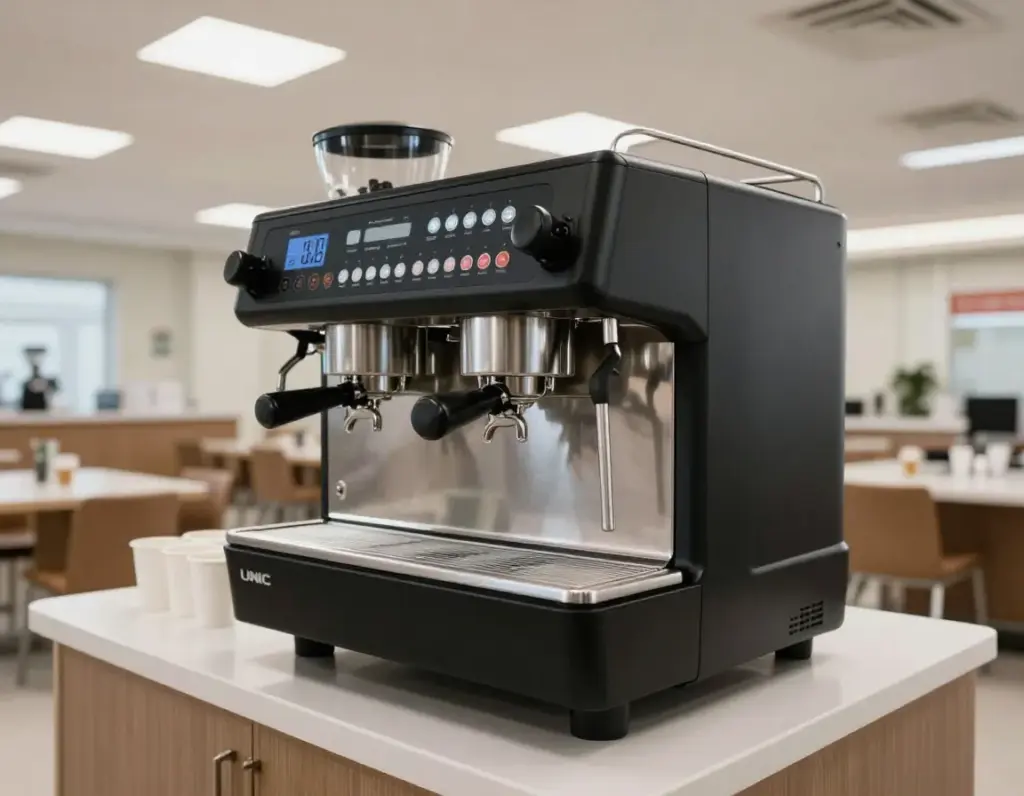
The UNIC Tango Ace Superautomatic dominates high-capacity environments with its impressive 48-drink customizable menu, massive 6.5-liter boiler, and dual grinding systems [6]. This industrial workhorse can produce up to 220 espressos per hour, making it ideal for the busiest commercial applications.
Key Features:
- 48 programmable drink options
- 6.5-liter boiler capacity
- Dual grinder configuration
- 220 espresso shots per hour capacity
- Advanced cleaning cycles
Best For: Large corporate offices, hospitals, universities, and high-traffic food service operations.
4. Rancilio Classe 11 – Traditional Reliability
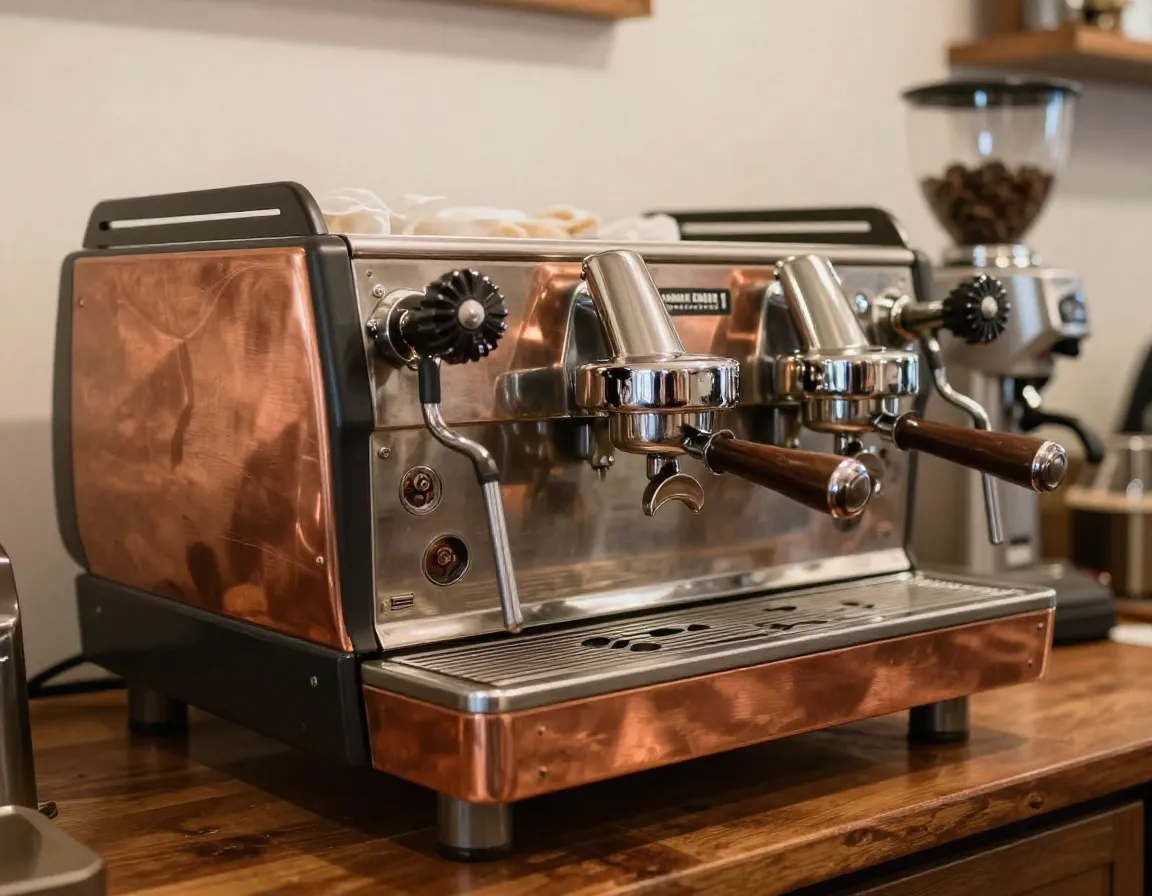
Rancilio’s reputation for building bulletproof commercial machines shines through in the Classe 11 series. These machines combine traditional Italian craftsmanship with modern reliability features, offering consistent performance in demanding environments.
Key Features:
- Multiple group head configurations (2-4 groups)
- Copper boiler with excellent heat retention
- Manual paddle operation for barista control
- Robust construction with minimal electronics
- Easy serviceability and parts availability
Best For: Traditional cafes, restaurants prioritizing longevity, and establishments with skilled barista staff.
5. Nuova Simonelli Appia Life – Versatile Performer
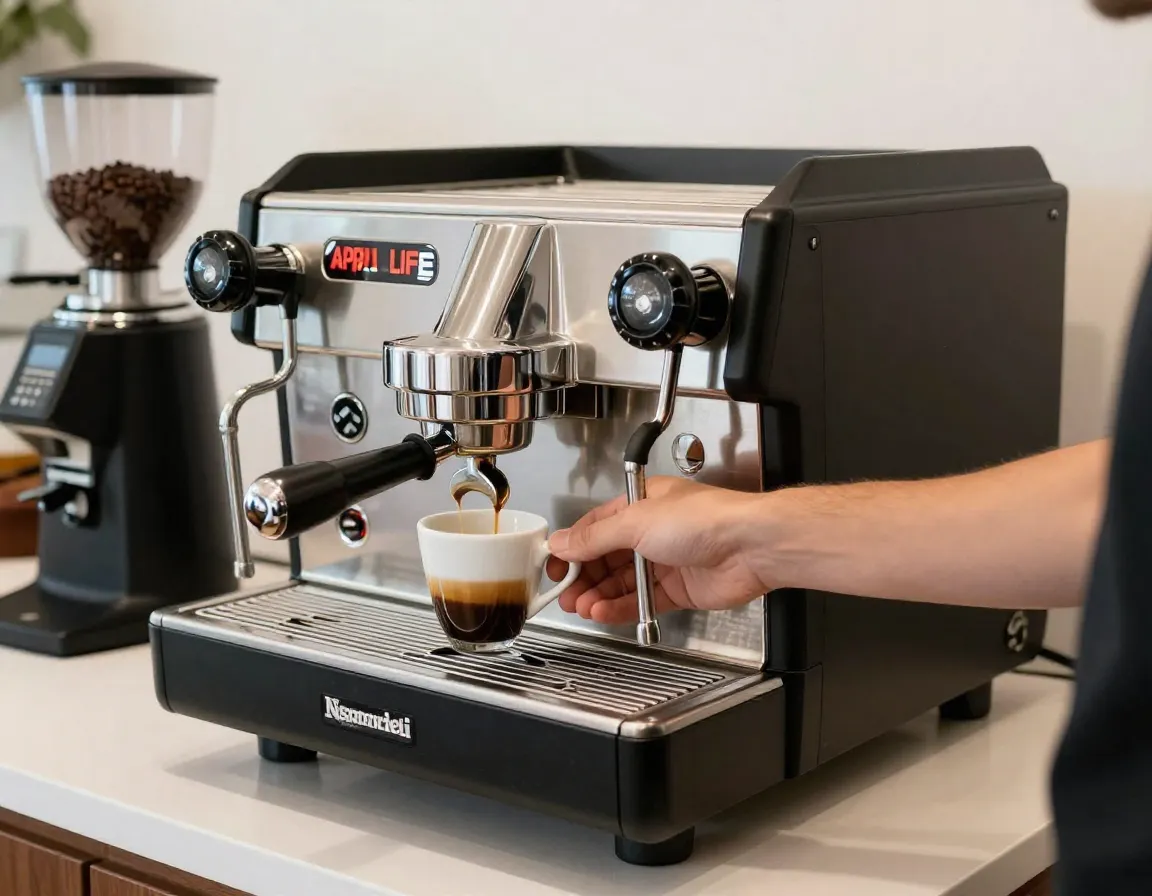
The Appia Life series offers exceptional versatility with both semi-automatic and volumetric programming options. This machine adapts to different operational styles while maintaining Nuova Simonelli’s reputation for thermal stability and consistent extraction.
Key Features:
- Soft infusion system for optimal extraction
- Volumetric dosing with manual override
- Easy Cup system for simplified operation
- Thermocompensated group heads
- Compact footprint with powerful performance
Best For: Mid-volume cafes, bakeries, and businesses transitioning from manual to automated systems.
6. Sanremo Zoe – Modern Innovation
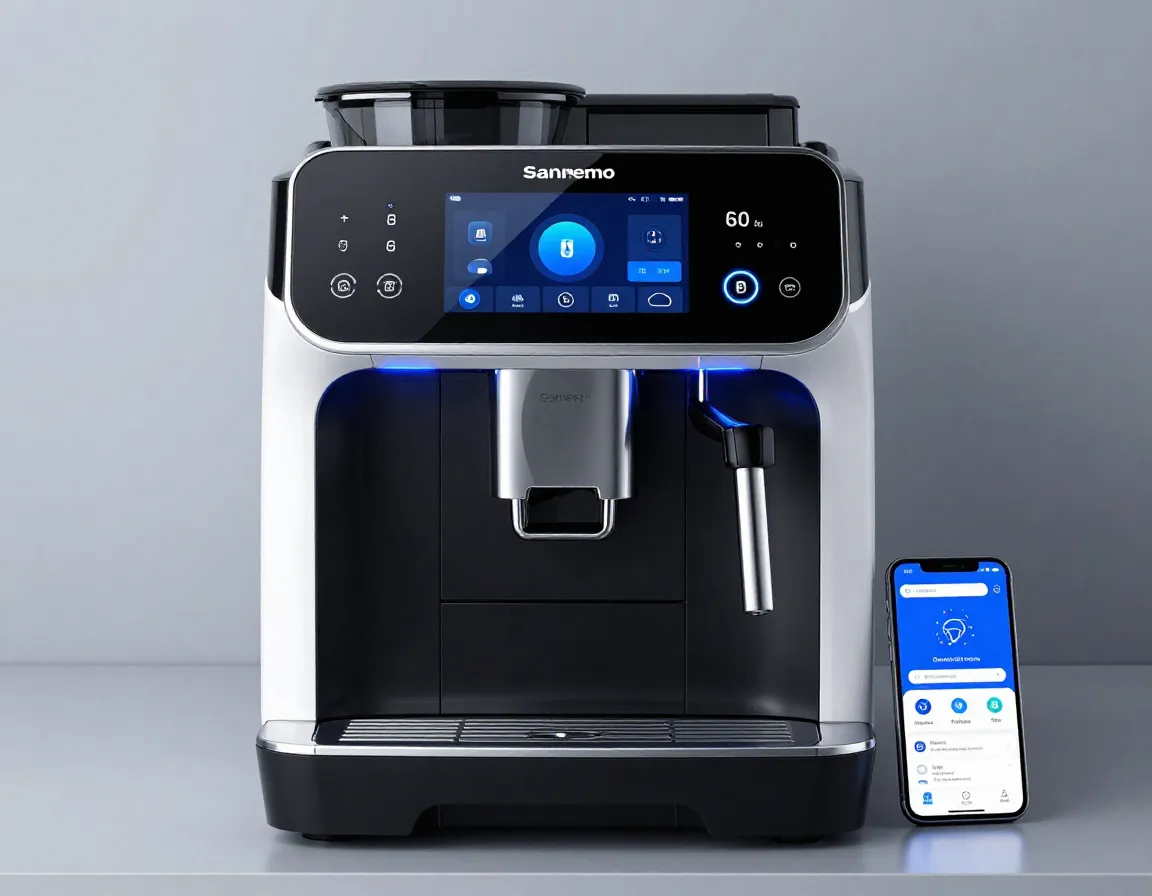
Sanremo’s Zoe brings cutting-edge technology to commercial coffee preparation with smart connectivity and precise temperature control. This machine represents the future of commercial coffee equipment with IoT integration and remote monitoring capabilities.
Key Features:
- Smart connectivity with mobile app control
- Independent boiler temperature control
- LED lighting system
- Programmable cleaning cycles
- Energy-saving standby modes
Best For: Tech-forward businesses, chain operations requiring remote monitoring, and establishments prioritizing energy efficiency.
7. Faema E71E – Sustainable Excellence
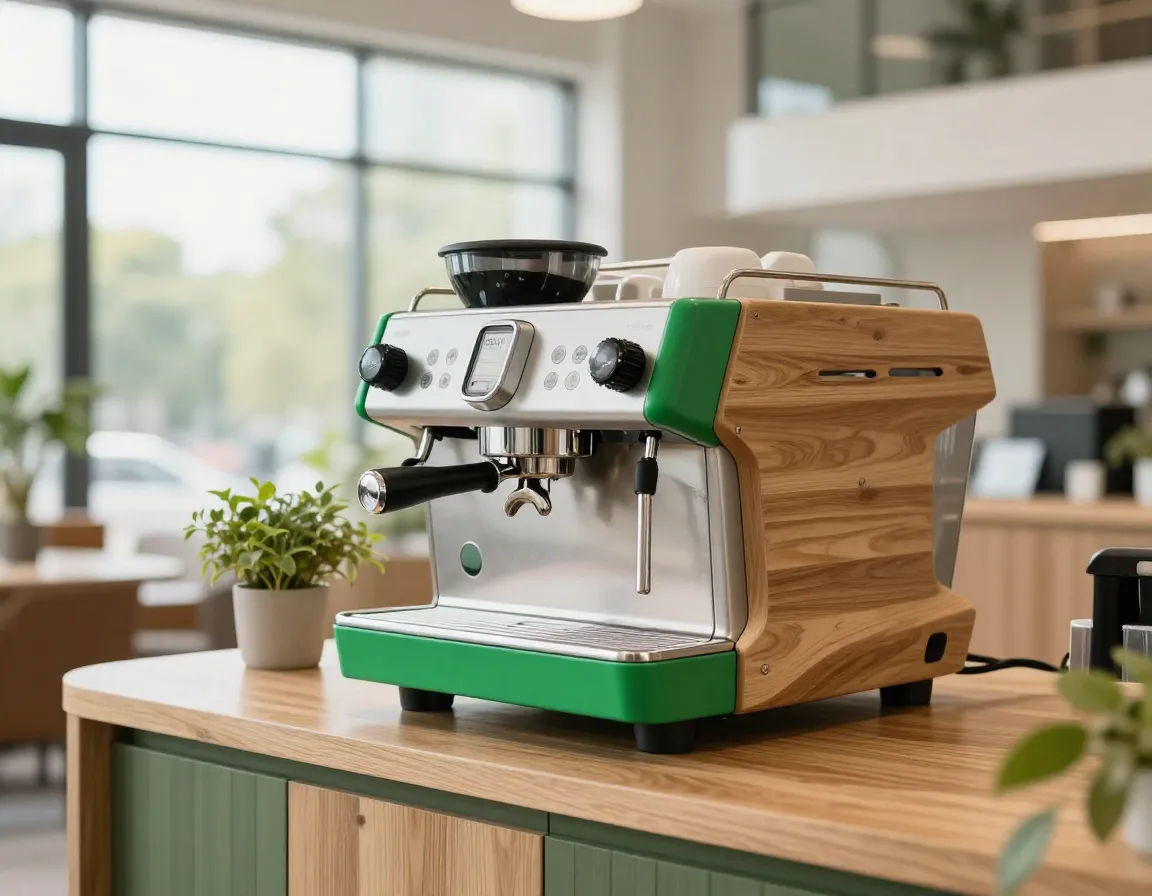
The Faema E71E focuses on environmental responsibility without compromising performance. This machine incorporates energy-saving technologies and sustainable materials while delivering consistent commercial-grade results.
Key Features:
- Energy-saving heat exchanger system
- Eco-friendly materials and construction
- Advanced water filtration
- Programmable energy management
- Reduced environmental footprint
Best For: Environmentally conscious businesses, LEED-certified buildings, and operations prioritizing sustainability.
8. Victoria Arduino Black Eagle Maverick – Precision Engineering
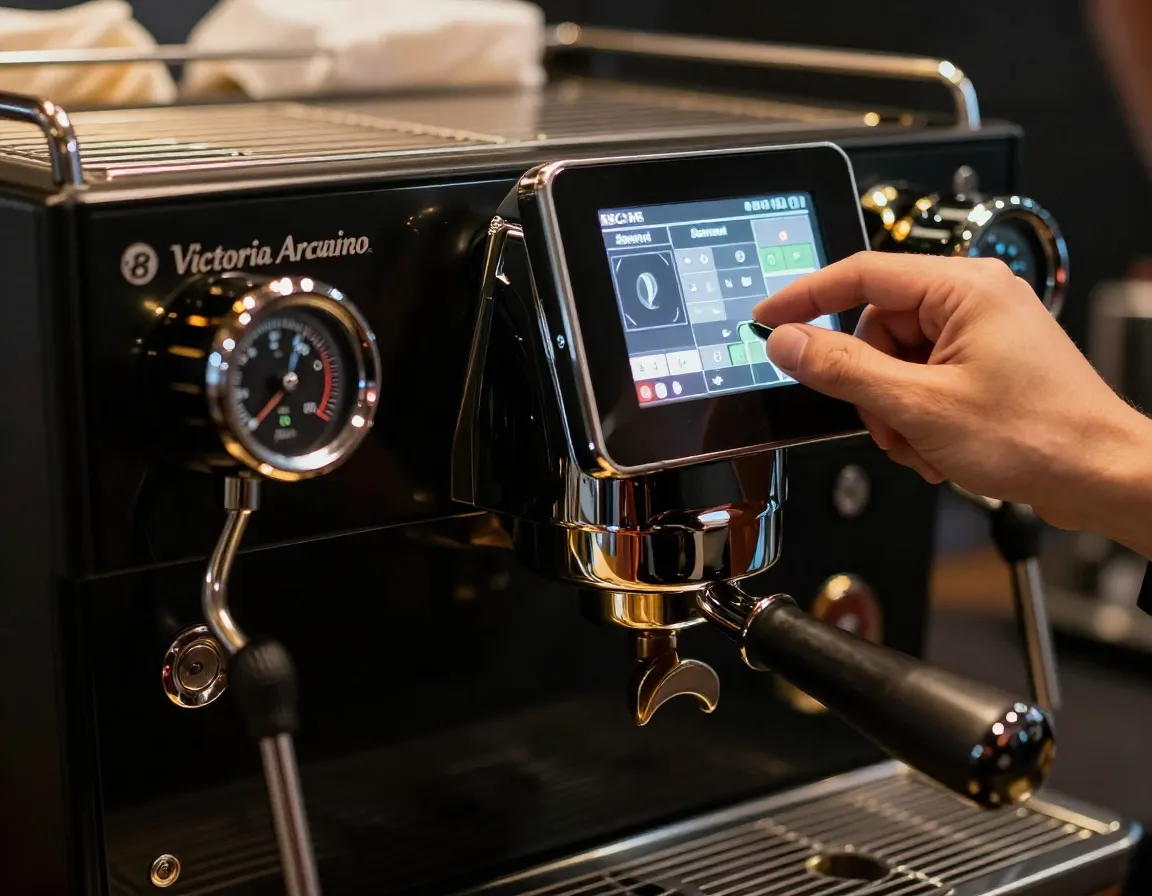
The Black Eagle Maverick represents Victoria Arduino’s commitment to precision and consistency. This machine features advanced temperature profiling and pressure control systems that ensure every cup meets exacting standards.
Key Features:
- Instant heating system
- Temperature profiling technology
- Pressure profiling capabilities
- Intuitive touchscreen interface
- Premium materials and finishes
Best For: High-end specialty coffee operations, competition-level brewing, and establishments where consistency is paramount.
9. Elektra Belle Epoque – Artisanal Craftsmanship
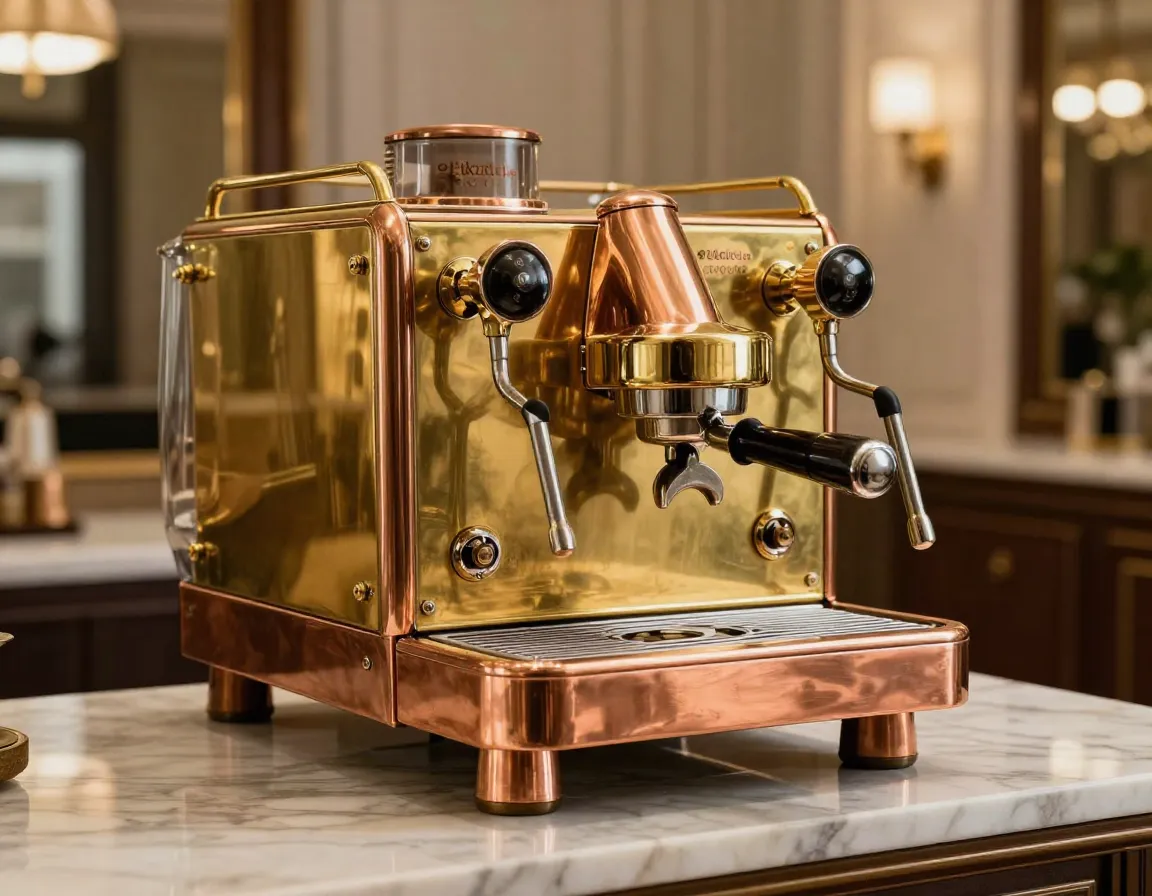
The Elektra Belle Epoque combines stunning visual appeal with serious commercial performance. This machine serves as both functional equipment and conversation piece, perfect for businesses where aesthetics matter as much as performance.
Key Features:
- Hand-crafted Italian design
- Brass and copper construction
- Traditional lever operation
- Artisanal attention to detail
- Conversation-starting visual appeal
Best For: Boutique cafes, luxury hotels, high-end retail environments, and businesses where equipment serves as decor.
Essential Features for Industrial Coffee Operations
Automation and Consistency Benefits
Fully automatic machines handle grinding, tamping, and brewing with precision, ensuring consistent quality throughout the day [1]. This automation becomes crucial during peak periods when manual consistency becomes challenging to maintain across multiple staff members with varying skill levels.
The consistency factor extends beyond taste to include portion control, extraction timing, and milk steaming temperatures. These variables directly impact both customer satisfaction and cost control, making automation a strategic business decision rather than just a convenience feature.
Thermal Management Systems
Dual-boiler systems with thermal stability are essential for managing peak demand periods without overheating [1]. Single-boiler machines struggle during high-volume periods, leading to temperature fluctuations that compromise extraction quality and increase wait times.
Advanced thermal management includes:
- Independent temperature controls for brewing and steaming
- Thermal compensation that adjusts for ambient temperature changes
- Heat recovery systems that maintain consistency during continuous use
- Energy-efficient heating that reduces operational costs
Maintenance and Serviceability
Commercial coffee machines require regular maintenance to perform reliably in industrial settings. The best machines feature:
- Accessible internal components for routine cleaning
- Automated cleaning cycles that reduce labor requirements
- Clear diagnostic systems that identify issues before failures occur
- Readily available parts and local service networks
- User-friendly maintenance schedules that integrate with operational workflows
Making the Right Investment Decision
Total Cost of Ownership Analysis
When evaluating 9 commercial-grade coffee machines for industrial use, consider total cost of ownership beyond initial purchase price. This includes:
Operating Costs:
- Energy consumption during peak and idle periods
- Water filtration and treatment requirements
- Coffee bean consumption rates and waste reduction
- Labor costs for operation and maintenance
Maintenance Expenses:
- Scheduled service intervals and costs
- Replacement parts availability and pricing
- Training requirements for staff operation
- Downtime costs during repairs or maintenance
Return on Investment Factors
The global fully automatic coffee machine market is expected to reach $51 billion by 2030 at a 5% growth rate [9], indicating strong industry confidence in commercial coffee equipment investments. This growth reflects increasing recognition of coffee quality’s impact on employee satisfaction, customer retention, and operational efficiency.
Quantifiable Benefits:
- Reduced labor costs through automation
- Improved consistency leading to customer retention
- Increased throughput during peak periods
- Energy efficiency reducing utility expenses
- Brand enhancement through quality coffee service
Implementation Timeline and Training
Successful commercial coffee machine implementation requires structured planning:
Week 1-2: Site preparation, electrical requirements, and water line installation
Week 3: Machine delivery, setup, and initial calibration
Week 4: Staff training on operation, basic maintenance, and troubleshooting
Month 2: Performance monitoring and fine-tuning
Month 3+: Regular maintenance schedule establishment and optimization
Conclusion
Selecting from these 9 commercial-grade coffee machines for industrial use requires careful consideration of your specific volume requirements, quality standards, and operational constraints. Whether you choose the precision of a La Marzocco Strada EP, the high-capacity performance of a UNIC Tango Ace, or the compact efficiency of a Jura Giga 10, the right machine becomes a strategic asset that enhances your business operations.
The commercial coffee equipment landscape continues evolving with advancing automation, improved energy efficiency, and enhanced connectivity features. European manufacturers maintain their quality leadership while emerging competitors provide cost-effective alternatives without sacrificing essential performance characteristics.
Your next steps should include:
- Assess your daily volume requirements using the guidelines provided (150-600+ cups)
- Calculate total cost of ownership including energy, maintenance, and training costs
- Schedule demonstrations with local dealers for hands-on evaluation
- Develop implementation timeline including site preparation and staff training
- Establish maintenance partnerships with certified service providers
The investment in quality commercial coffee equipment pays dividends through improved employee satisfaction, enhanced customer experiences, and operational efficiency gains that compound over time. Choose wisely, and your commercial coffee machine will serve as the foundation for countless perfect cups and satisfied customers for years to come.
References
[1] Best Coffee Machines For Offices Of The Year – https://www.purebean.com.au/blog/best-coffee-machines-for-offices-of-the-year/
[2] How To Choose A Commercial Espresso Machine – https://coffeedazheng.com/2026/02/05/how-to-choose-a-commercial-espresso-machine/
[3] Watch – https://www.youtube.com/watch?v=2Audyg648bk
[6] Commercial Espresso Machines – https://www.chriscoffee.com/collections/commercial-espresso-machines
[9] Fully Automatic Coffee Machine Global Market Report – https://www.thebusinessresearchcompany.com/report/fully-automatic-coffee-machine-global-market-report