9 Best Industrial Coffee Makers for Your Cafe or Restaurant
Picture this: It’s 7 AM on a Monday morning, and your cafe is packed with caffeine-craving customers forming a line out the door. Your current coffee machine starts sputtering, steam hissing irregularly, and you realize you’re about to lose dozens of customers – and hundreds of dollars in revenue. This nightmare scenario happens to countless cafe owners who underestimate the importance of investing in reliable, high-quality industrial coffee equipment.
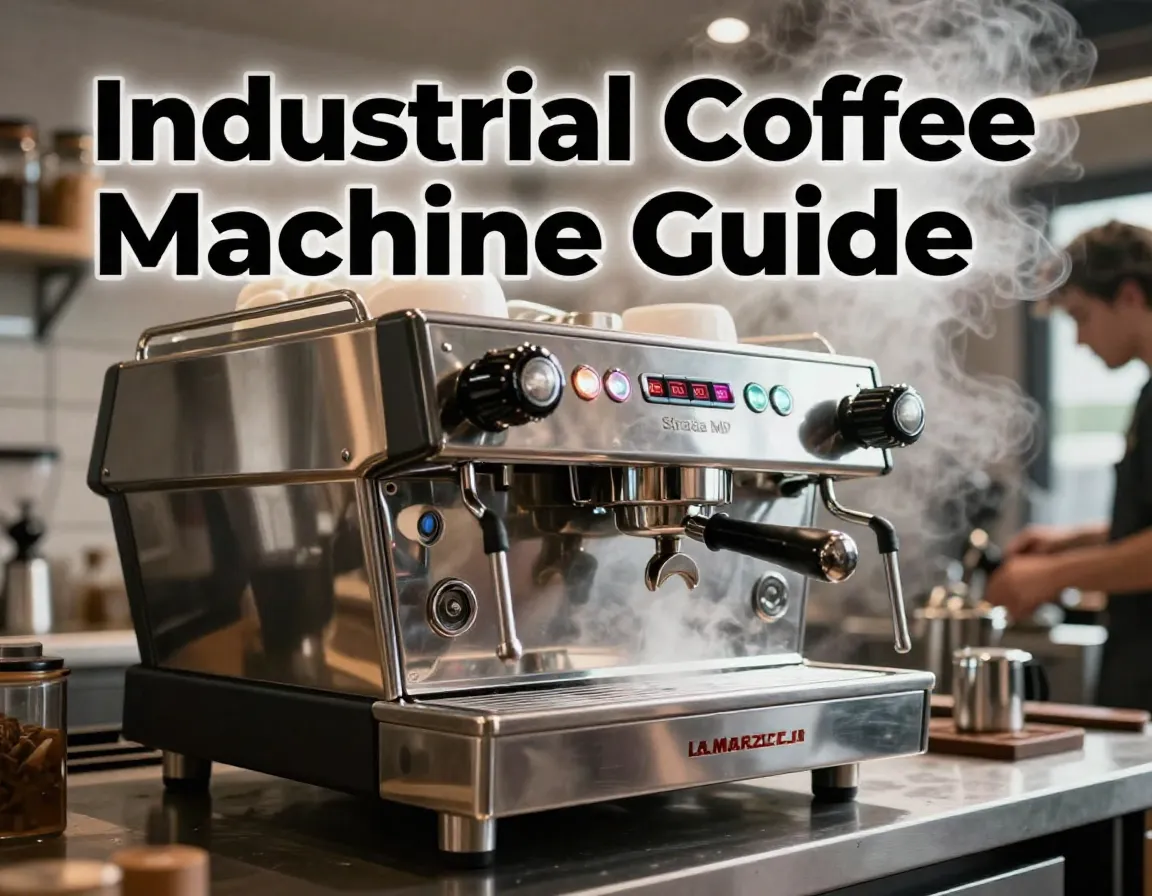
Choosing the right commercial coffee maker isn’t just about brewing coffee; it’s about ensuring your business runs smoothly, your customers stay satisfied, and your profit margins remain healthy. Whether you’re opening a new cafe, upgrading your restaurant’s beverage program, or replacing aging equipment, finding the 9 best industrial coffee makers for your cafe or restaurant requires careful consideration of volume, quality, durability, and budget.
In 2026, the commercial coffee equipment market offers more sophisticated options than ever before, from traditional manual espresso machines that give baristas complete control to super-automatic systems that deliver consistent results with minimal training. The key is matching your equipment to your specific business needs, staff expertise, and customer expectations.
Key Takeaways
- Volume and durability matter most – Commercial coffee machines must handle regular heavy use and last for years while maintaining consistent performance
- Staff training requirements vary significantly – Super-automatic machines require minimal barista skills, while manual espresso machines demand extensive training for optimal results
- Investment ranges from $5,000 to $25,000+ – Premium machines like the La Marzocco Strada MP cost over $23,000 but offer unmatched quality and features
- Dual boiler systems provide superior performance – Separate boilers for brewing and steaming allow simultaneous operations and better temperature control
- Consider your business model – High-volume specialty cafes need different equipment than low-volume restaurants or quick-service locations
Understanding Commercial Coffee Equipment Needs
Before diving into specific recommendations, it’s crucial to understand what separates industrial coffee makers from home equipment. Commercial coffee machines are designed for durability and regular use, built to withstand the demands of serving hundreds of customers daily while maintaining consistent quality [1].
The main categories of commercial coffee equipment include:
- Manual espresso machines requiring skilled baristas
- Semi-automatic machines offering programmable features
- Super-automatic systems handling everything from grinding to brewing
- Batch brewers for drip coffee service
- Specialty brewing equipment for pour-over and alternative methods
Your choice depends on several factors: daily volume, staff expertise, menu complexity, available space, and budget. A busy specialty coffee shop serving 500+ drinks daily has vastly different needs than a restaurant offering coffee as a secondary beverage option.
Top-Tier Professional Espresso Machines
1. La Marzocco Strada MP – Best Overall Commercial Espresso Machine
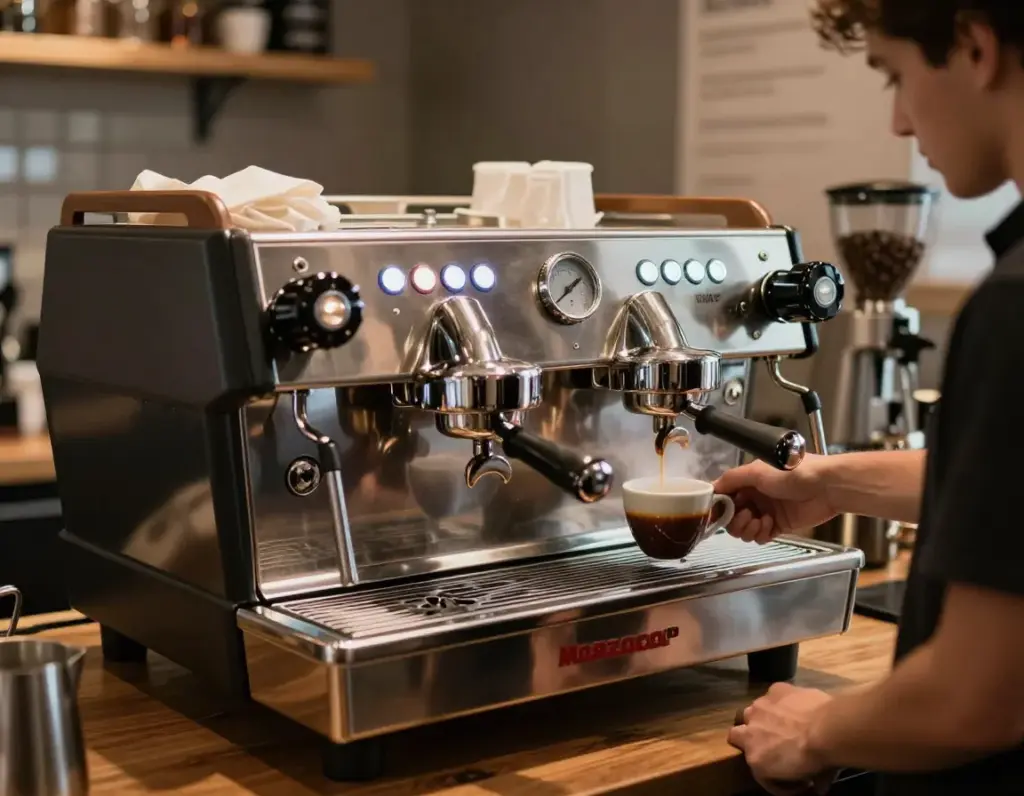
The La Marzocco Strada MP stands as the gold standard for high-volume, quality-focused coffee shops. Priced over $23,000, this machine represents the pinnacle of commercial espresso technology [1].
Key Features:
- Dual boiler system for independent temperature control
- Dual steam wands for efficient milk steaming
- Automatic backflush system for easy maintenance
- Individual pre-infusion capability for each group head
- Professional-grade construction built for years of heavy use
The Strada MP excels in specialty coffee environments where barista skill and drink quality are paramount. Its advanced pre-infusion system allows for optimal extraction of different coffee beans, while the dual boiler design ensures consistent brewing and steaming temperatures even during peak service periods.
Best for: High-volume specialty cafes, third-wave coffee shops, establishments prioritizing drink quality over speed.
2. La Marzocco Linea AV – Premium Two-Group Solution
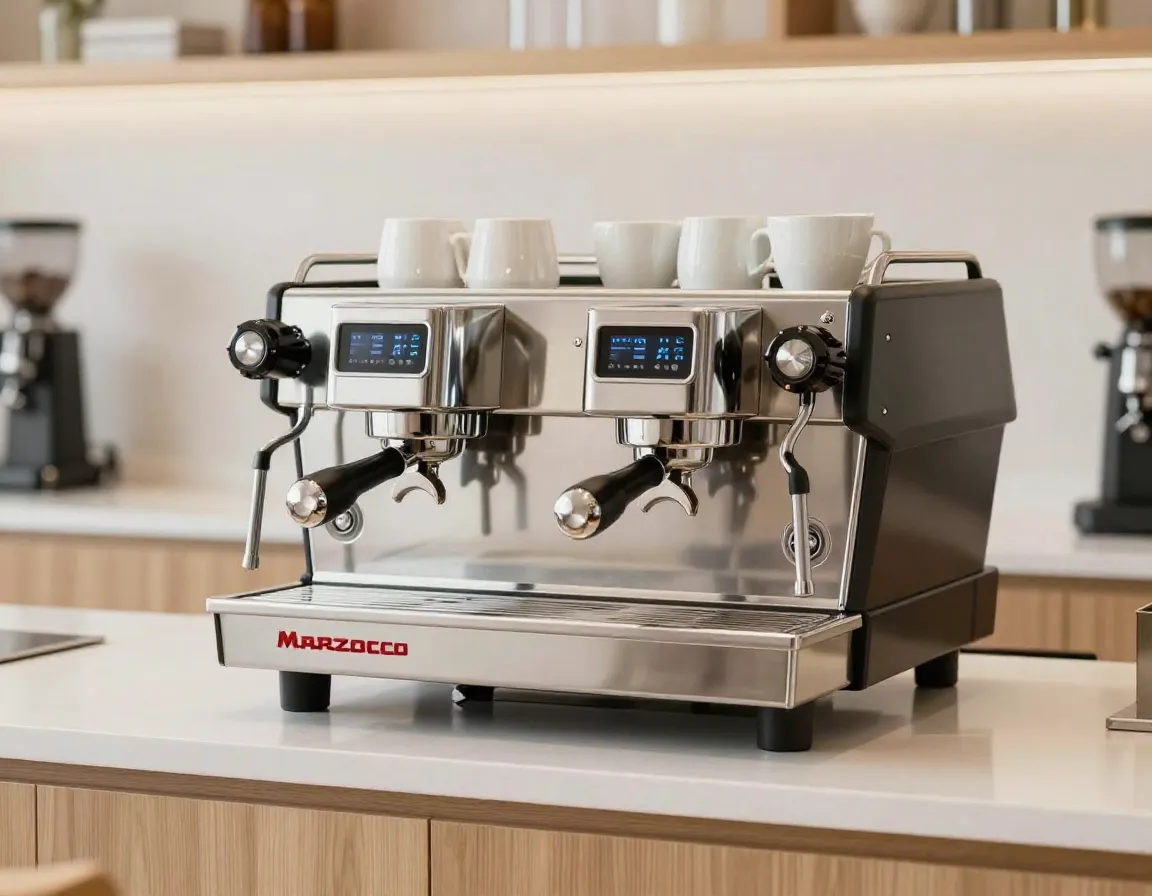
At $14,900 for a two-group configuration, the La Marzocco Linea AV offers many premium features at a more accessible price point than the Strada MP [1].
Standout Features:
- Dual boilers with precise temperature stability
- Volumetric shot controls for consistency
- Plumbed water line capability for continuous operation
- Dual steam wands for efficient workflow
- Proven reliability in commercial settings
The Linea AV strikes an excellent balance between advanced features and operational simplicity. Its volumetric controls help maintain shot consistency across different baristas, while the robust construction ensures reliable performance in demanding cafe environments.
Ideal for: Medium to high-volume cafes, establishments wanting La Marzocco quality with easier operation than manual machines.
3. Nuova Simonelli Wave – Mid-Range Commercial Powerhouse
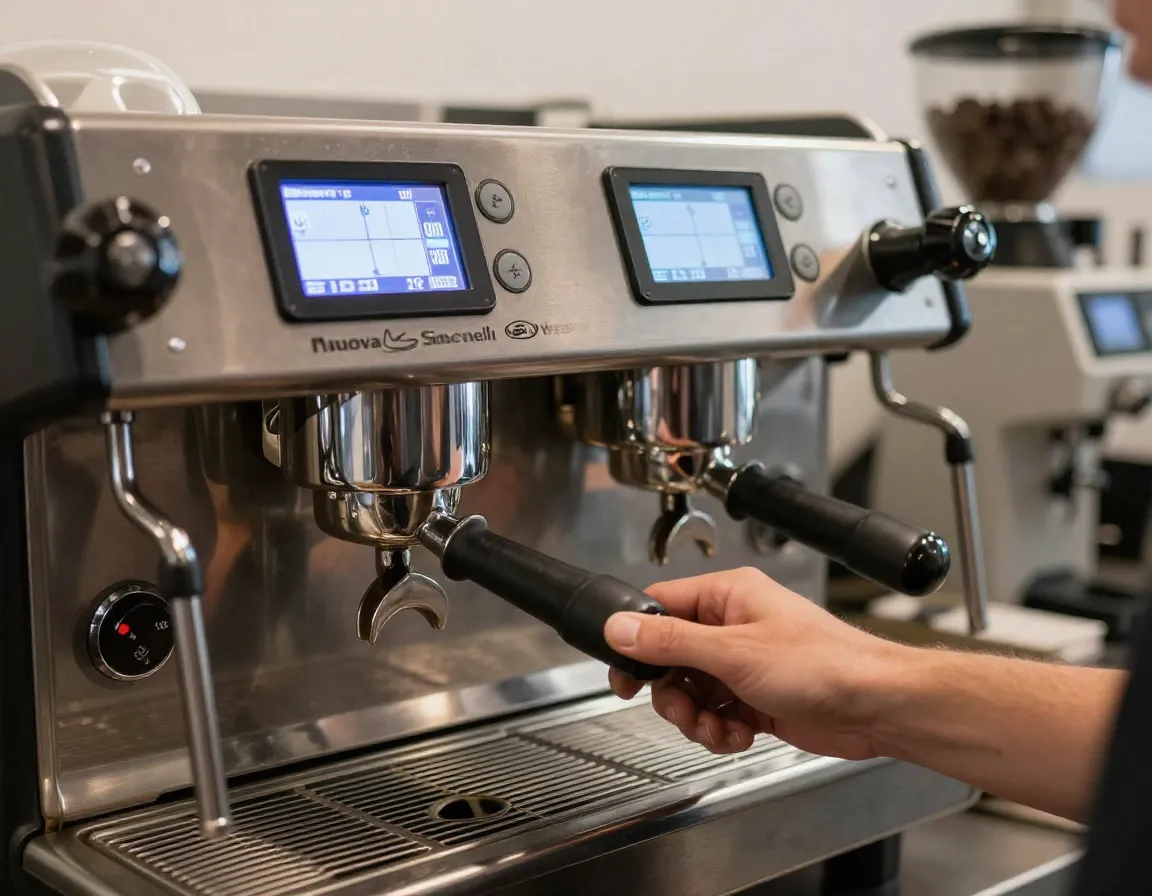
The Nuova Simonelli Wave delivers professional performance at $10,500, making it an attractive option for medium-volume operations [1].
Notable Features:
- Volumetric dosing for consistent shots
- Dual steam wands for efficient milk preparation
- LCD displays for easy monitoring
- Automatic backflushing system
- Pre-infusion capability for enhanced extraction
This machine offers excellent value for cafes that need commercial-grade performance without the premium price tag of top-tier brands. The LCD displays provide valuable feedback for baristas, while the automatic systems reduce maintenance complexity.
Perfect for: Medium-volume cafes, coffee shops with moderate budgets, establishments prioritizing reliability and ease of use.
4. Rocket Espresso Boxer Timer – Small Shop Specialist
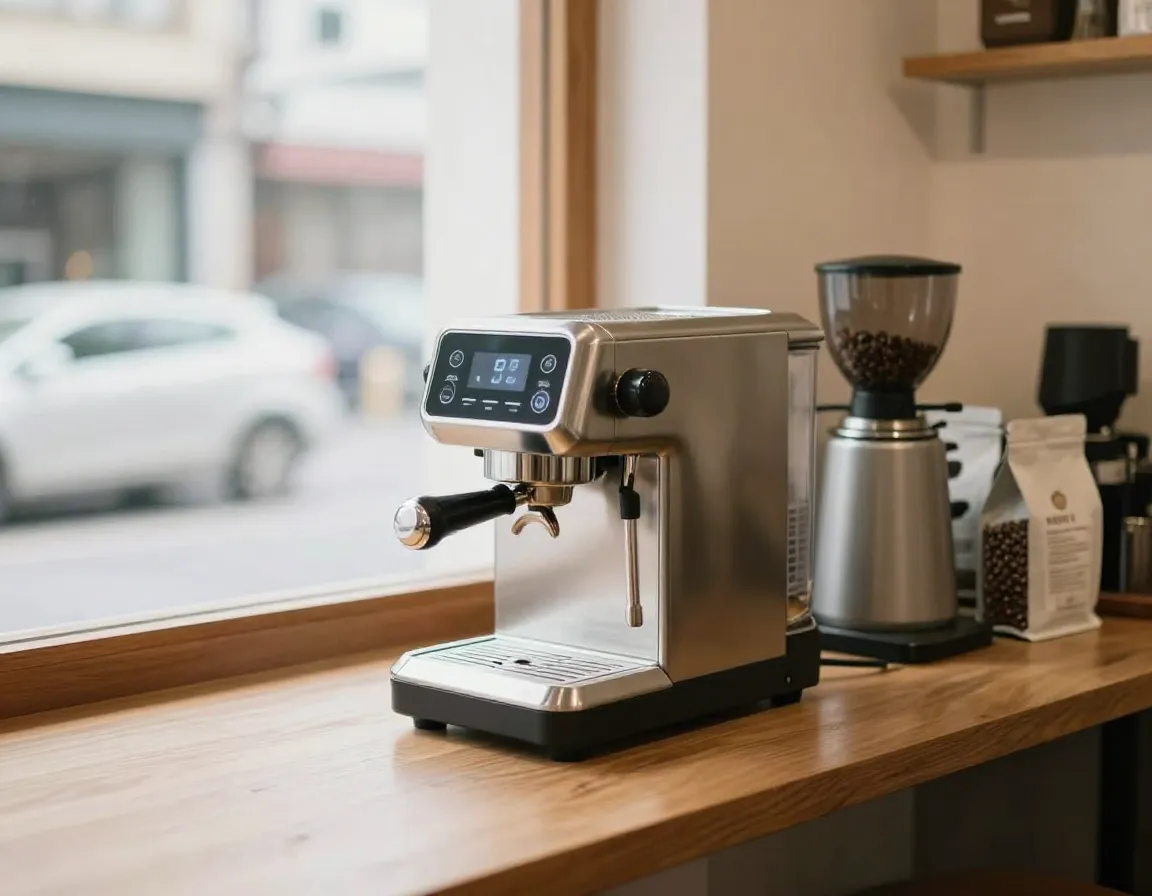
The Rocket Espresso Boxer Timer caters specifically to small coffee shops with its programmable shot recipes and consistent results [1].
Key Advantages:
- Programmable timing for shot consistency
- Compact footprint suitable for smaller spaces
- Manual control with automated assistance
- Quality construction at a reasonable price point
- User-friendly operation for smaller teams
This machine bridges the gap between home and full commercial equipment, offering professional results in a more manageable package for smaller operations.
Best suited for: Small cafes, startup coffee shops, establishments with limited counter space and moderate volume.
Automated Solutions for Efficiency
5. Jura GIGA 10 – Super-Automatic Excellence
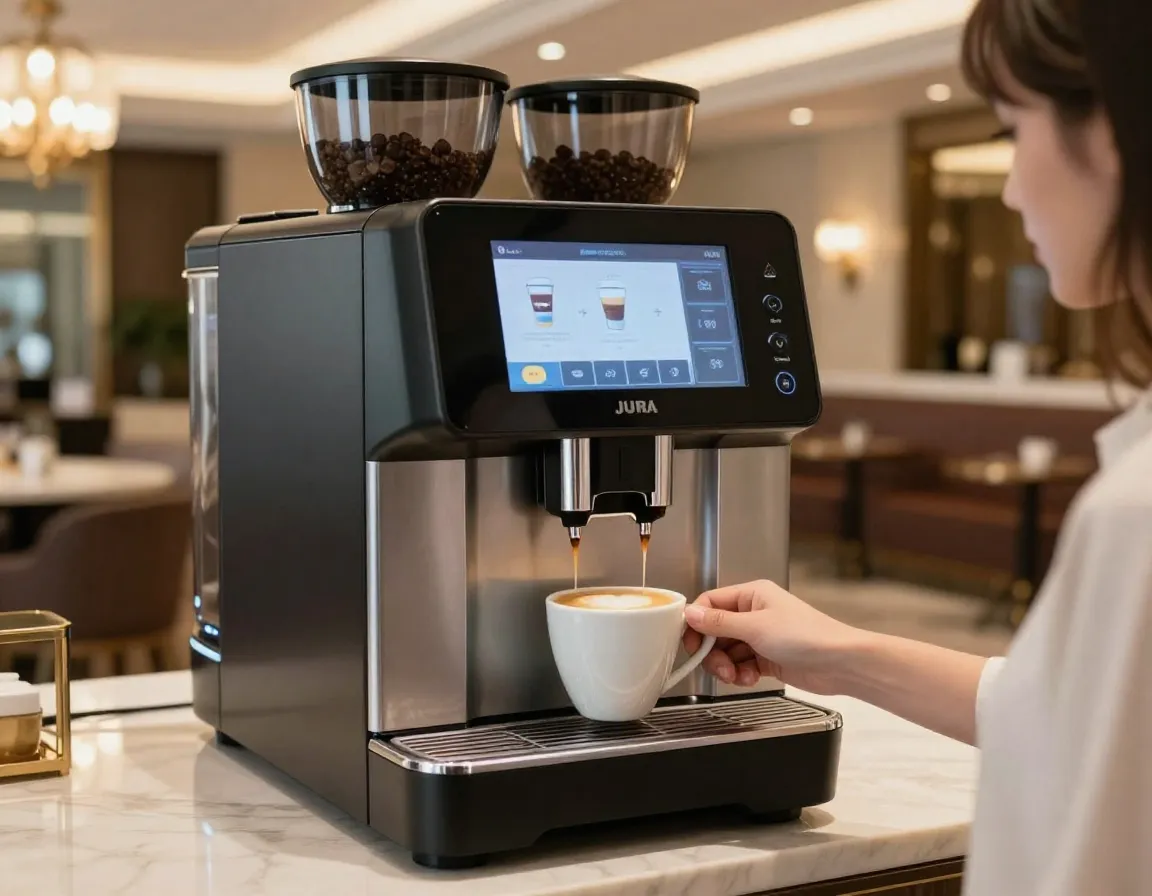
The Jura GIGA 10 represents the pinnacle of super-automatic espresso machines, ideal for locations without dedicated coffee professionals [1].
Impressive Specifications:
- 88-ounce (2.6-liter) water reservoir
- 35 pre-programmed drink recipes
- Two 10-ounce bean hoppers for variety
- Built-in grinder with multiple settings
- Minimal training requirements
Super-automatic machines like the Jura GIGA 10 are ideal for locations without dedicated coffee professionals, as they require very little training or barista skills [1]. This makes them perfect for restaurants, hotels, or quick-service locations where coffee quality matters but specialized staff isn’t available.
Ideal for: Restaurants, hotels, offices, locations with untrained staff, establishments prioritizing consistency over artisanal preparation.
6. Commercial Batch Brewing Systems
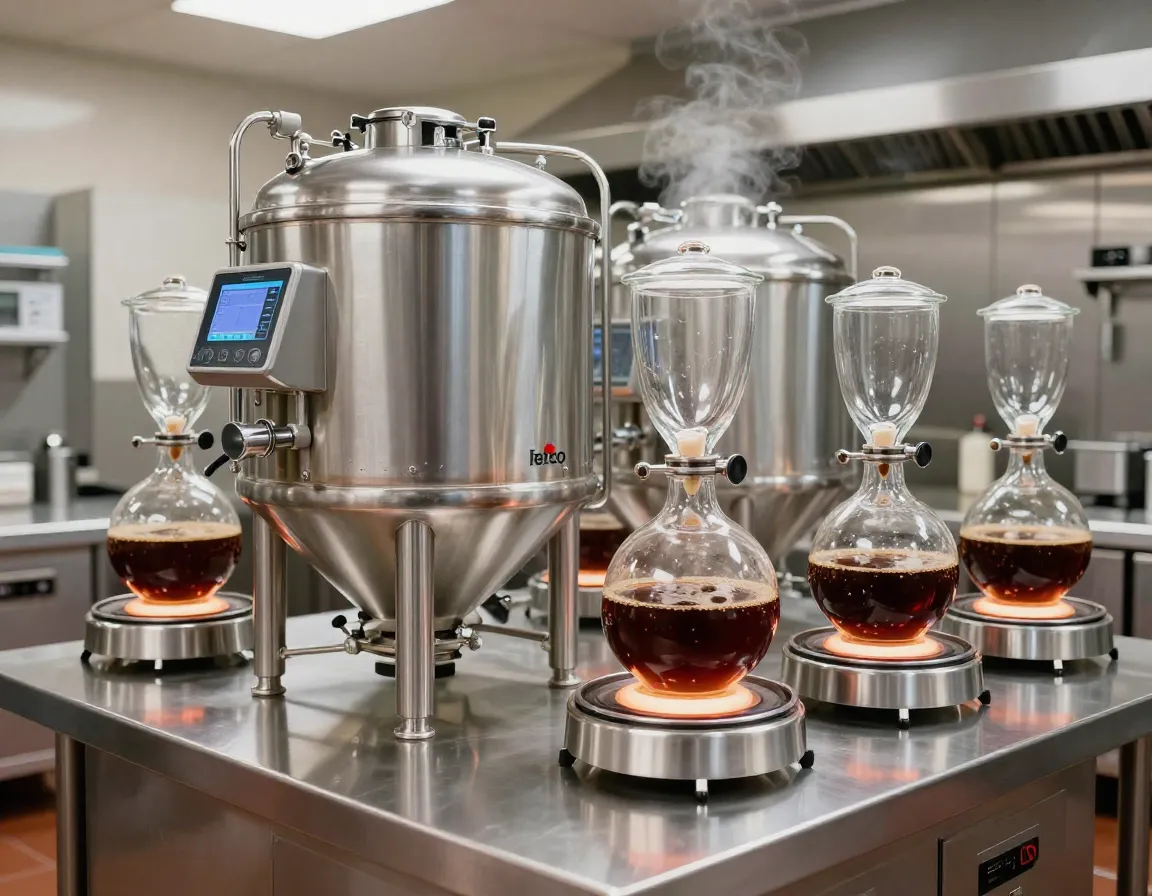
For establishments serving large volumes of drip coffee, commercial batch brewers provide efficiency and consistency that manual methods can’t match.
Fetco and Wilbur Curtis brewers are trusted by specialty cafes worldwide and set standards for excellence in the commercial batch brew category [8]. These systems offer:
- Large batch capacity (1-5 gallons)
- Precise temperature control
- Programmable brewing cycles
- Multiple warming plate options
- Easy cleaning and maintenance
Benefits of Commercial Batch Brewers:
- High volume capacity for busy periods
- Consistent quality across batches
- Lower labor requirements than manual brewing
- Cost-effective for drip coffee service
- Reliable performance in demanding environments
Best for: High-volume drip coffee service, restaurants, quick-service establishments, locations serving coffee as a secondary beverage.
Specialized Equipment for Diverse Needs
7. Combination Espresso and Drip Systems
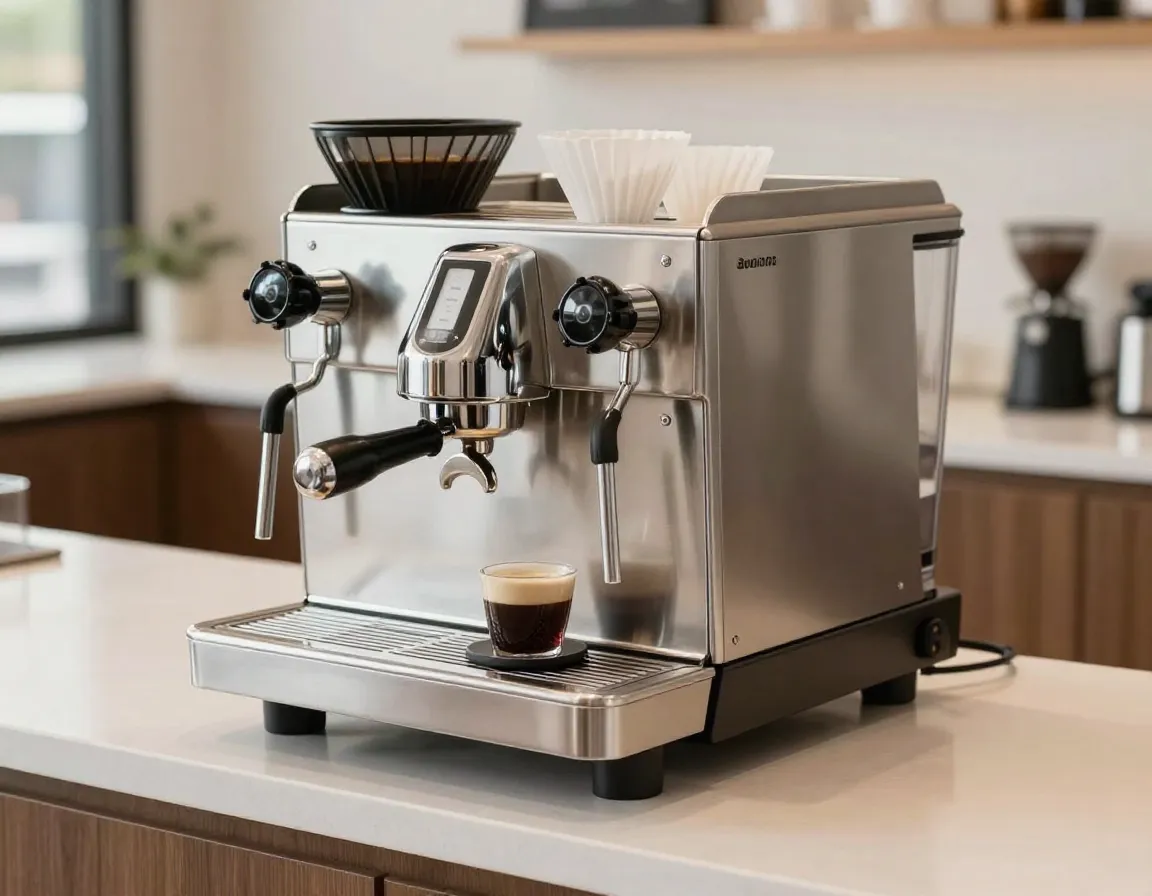
Many modern commercial coffee makers combine espresso and drip brewing capabilities in a single unit, maximizing versatility while minimizing counter space requirements.
Advantages:
- Space efficiency in smaller kitchens
- Unified training for staff
- Consistent brand aesthetic
- Simplified maintenance protocols
- Cost savings over separate systems
These systems work particularly well for restaurants and cafes that need both espresso-based drinks and traditional drip coffee but have space or budget constraints.
8. High-Volume Steam and Brewing Stations
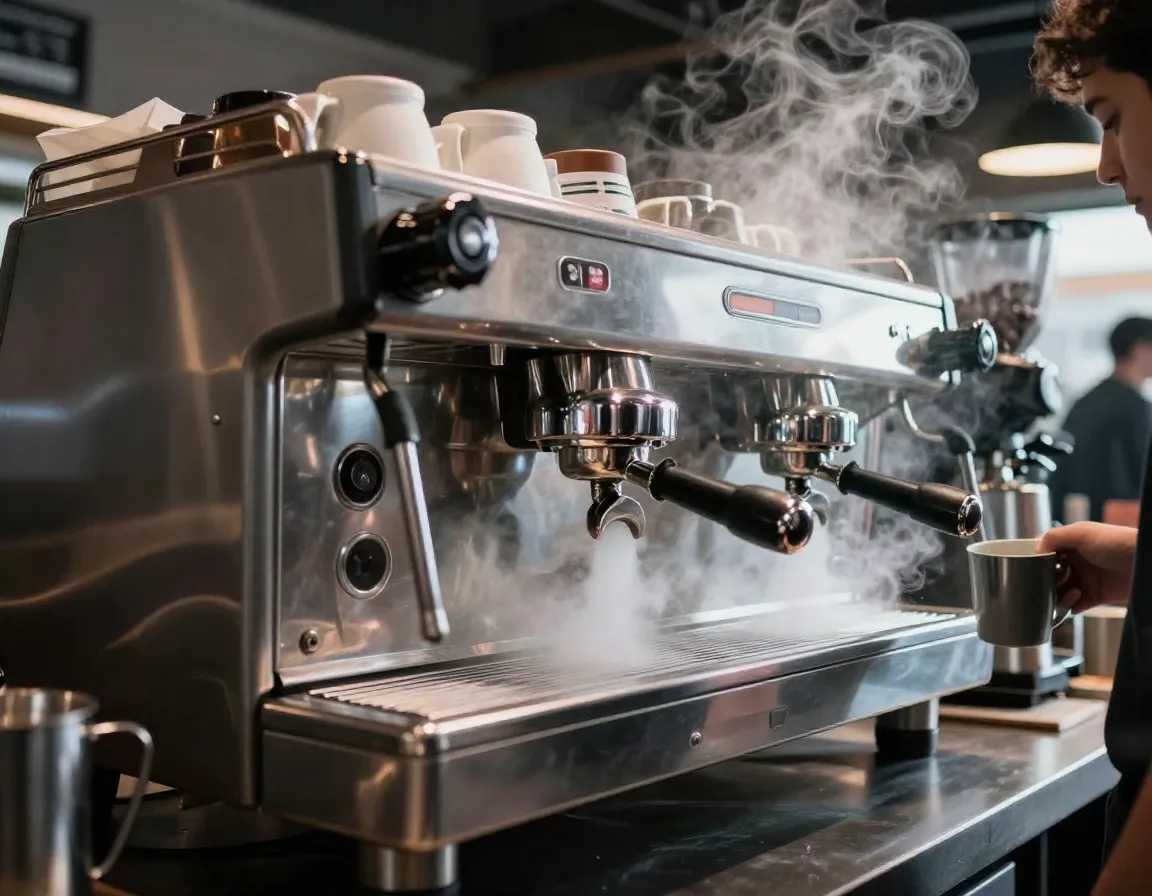
For the busiest cafes and restaurants, dedicated high-volume systems provide the capacity needed to serve hundreds of customers during peak periods.
Features to consider:
- Multiple group heads (3-4 groups)
- High-capacity boilers
- Advanced temperature stability
- Commercial-grade steam power
- Robust construction for continuous use
9. Modular Coffee Systems
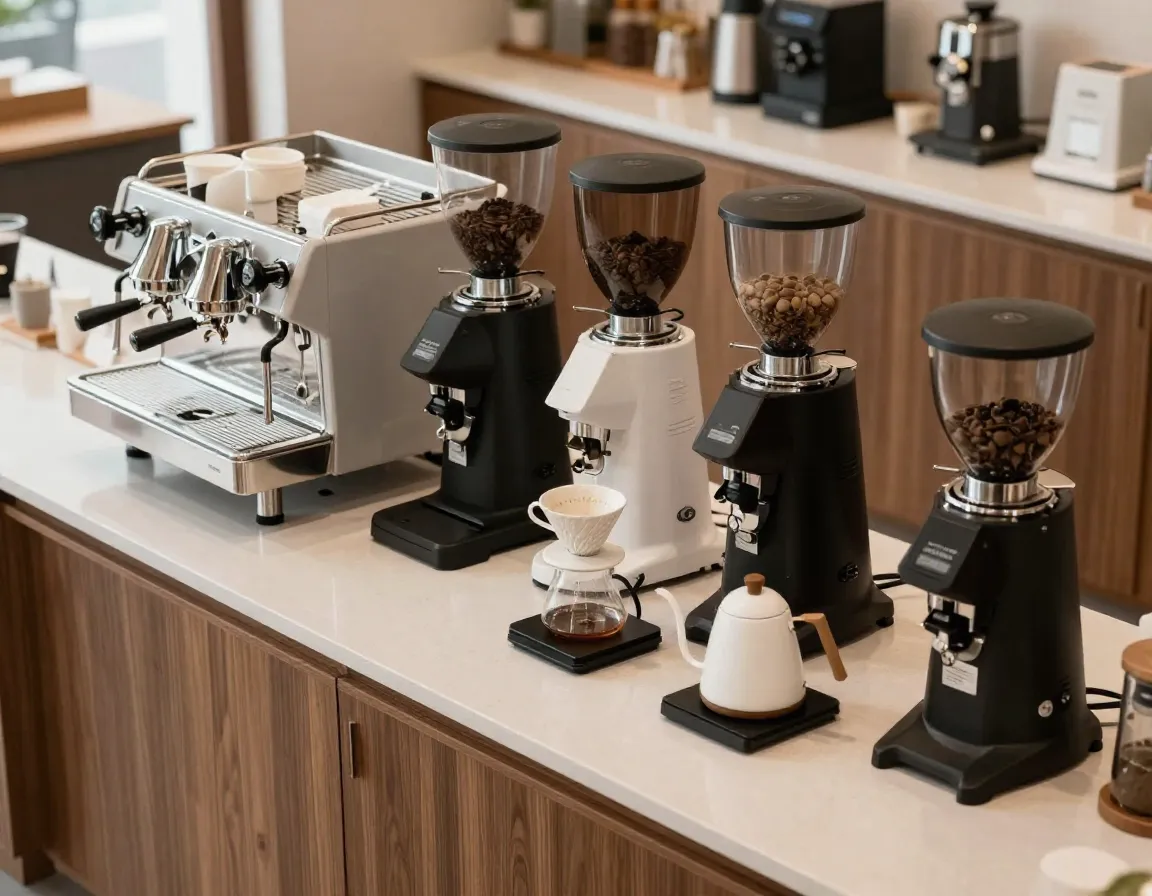
Modular systems allow cafes to customize their setup based on specific needs, combining different brewing methods, grinders, and accessories in a cohesive package.
Flexibility benefits:
- Scalable as business grows
- Customizable to menu requirements
- Easy to upgrade individual components
- Adaptable to changing customer preferences
- Professional appearance and workflow
Factors to Consider When Choosing Industrial Coffee Makers
Volume and Capacity Requirements
Understanding your daily coffee volume is crucial for selecting appropriate equipment. Consider:
- Peak hour demand – How many drinks do you serve during your busiest hour?
- Daily totals – What’s your average daily coffee sales volume?
- Growth projections – How might your volume change over the next 2-3 years?
- Seasonal variations – Do you experience significant seasonal fluctuations?
Staff Training and Expertise
Different machines require varying levels of barista skill:
- Manual machines demand extensive training and ongoing skill development
- Semi-automatic systems offer a balance of control and consistency
- Super-automatic machines require minimal training but offer less customization
Budget Considerations
Commercial coffee equipment represents a significant investment. Consider:
- Initial purchase price – Equipment costs range from $5,000 to $25,000+
- Installation expenses – Plumbing, electrical, and ventilation requirements
- Ongoing maintenance – Regular servicing and part replacement costs
- Training investments – Staff education and certification programs
Space and Infrastructure
Evaluate your physical requirements:
- Counter space – Measure available area for equipment placement
- Electrical needs – Ensure adequate power supply for commercial equipment
- Plumbing access – Consider water line and drainage requirements
- Ventilation – Account for steam and heat generation
Maintenance and Longevity Tips
Proper maintenance is essential for maximizing your investment in commercial coffee equipment:
Daily Maintenance Tasks
- Clean steam wands after each use
- Empty and rinse drip trays
- Wipe down exterior surfaces
- Check water levels and quality
Weekly Maintenance
- Deep clean group heads and portafilters
- Descale according to manufacturer guidelines
- Clean and calibrate grinders
- Inspect seals and gaskets
Professional Servicing
- Schedule quarterly professional maintenance
- Keep detailed service records
- Address issues promptly to prevent major repairs
- Train staff on proper operation procedures
Cost-Benefit Analysis for Your Business
When evaluating the 9 best industrial coffee makers for your cafe or restaurant, consider the total cost of ownership:
Revenue Impact
- Drink quality affects customer satisfaction and repeat business
- Speed of service influences customer throughput during peak periods
- Menu versatility enables premium pricing for specialty drinks
- Reliability prevents lost sales due to equipment failures
Operational Efficiency
- Labor requirements vary significantly between machine types
- Training costs differ based on equipment complexity
- Maintenance expenses impact long-term profitability
- Energy consumption affects ongoing operational costs
Making Your Final Decision
Choosing among the 9 best industrial coffee makers for your cafe or restaurant requires balancing multiple factors:
- Assess your specific needs – Volume, quality requirements, staff capabilities
- Set a realistic budget – Include installation, training, and maintenance costs
- Research thoroughly – Read reviews, visit showrooms, talk to other operators
- Consider future growth – Choose equipment that can scale with your business
- Plan for support – Ensure reliable service and parts availability
Conclusion
Selecting the right industrial coffee maker is one of the most important decisions you’ll make for your cafe or restaurant. The 9 best industrial coffee makers for your cafe or restaurant outlined in this guide represent different approaches to commercial coffee preparation, from the artisanal excellence of the La Marzocco Strada MP to the automated efficiency of the Jura GIGA 10.
Remember that commercial coffee machines should be durable enough for regular use and designed to last years while fitting particular business needs [1]. Your choice should align with your volume requirements, staff expertise, budget constraints, and quality expectations.
The investment in quality commercial coffee equipment pays dividends through improved customer satisfaction, operational efficiency, and long-term reliability. Whether you choose a premium manual espresso machine that showcases barista artistry or a super-automatic system that ensures consistency with minimal training, the key is matching your equipment to your business model and growth plans.
Take action today:
- Evaluate your current coffee program and identify areas for improvement
- Calculate your daily volume and peak service requirements
- Set a realistic budget including installation and training costs
- Contact equipment dealers for demonstrations and quotes
- Speak with other cafe owners about their experiences and recommendations
The perfect commercial coffee maker for your business is waiting – invest the time to choose wisely, and you’ll reap the benefits for years to come.
References
[1] Best Commercial Espresso Machine – https://www.coffeeness.de/en/best-commercial-espresso-machine/
[8] Commercial Coffee Makers – https://prima-coffee.com/brew/coffee/automatic/commercial-coffee-makers