8 Pro Tips to Master Your Breville Barista Pro Espresso Machine
Picture this: It’s 6 AM, and while your neighbors are still fumbling with instant coffee, you’re about to pull a café-quality espresso shot that would make any Italian barista nod in approval. The secret? You’ve mastered the art of using your Breville Barista Pro espresso machine like a true professional. If you’re ready to transform your morning coffee routine and unlock the full potential of this remarkable machine, these 8 Pro Tips to Master Your Breville Barista Pro Espresso Machine will elevate your home brewing game from amateur to expert level.

Key Takeaways
- Master the grind settings: Utilize all 30 precision grind settings to find your perfect extraction sweet spot for different coffee beans and brewing preferences
- Perfect your pre-infusion timing: Adjust the default pre-infusion from extended factory settings to approximately 5 seconds for optimal flavor extraction
- Temperature precision matters: Leverage the digital PID temperature control system that maintains ±2°C precision for consistent, professional-quality shots
- Maintenance is crucial: Follow the on-screen maintenance prompts and use the included water filter to extend your machine’s lifespan and performance
- Practice milk texturing techniques: Master the manual steam wand to create café-quality microfoam for stunning latte art and perfectly textured beverages
Understanding Your Breville Barista Pro’s Core Features
Before diving into the advanced techniques, let’s establish a solid foundation by understanding what makes your Breville Barista Pro special. This machine represents the best combination of performance, features, and value in Breville’s lineup [4], and knowing its capabilities will help you maximize every feature.
The ThermoJet heating system is your first advantage – it reaches optimal temperature in just 3 seconds [1][2], making it one of the fastest heat-up times available in the semi-automatic espresso machine category. This means no more waiting around for your morning coffee fix!
Your machine operates at 15 bar pump pressure with intelligent low pressure pre-infusion followed by 9 bar extraction [2][3]. This two-stage pressure system mimics professional commercial machines, ensuring optimal flavor extraction from your coffee grounds.
The digital PID temperature control delivers water at ±2°C precision [1][3], offering more precise control than most competing Breville semi-automatic machines. This level of temperature stability is crucial for consistent espresso extraction.
Mastering the Integrated Grinder System
1. Optimize Your Grind Settings for Perfect Extraction
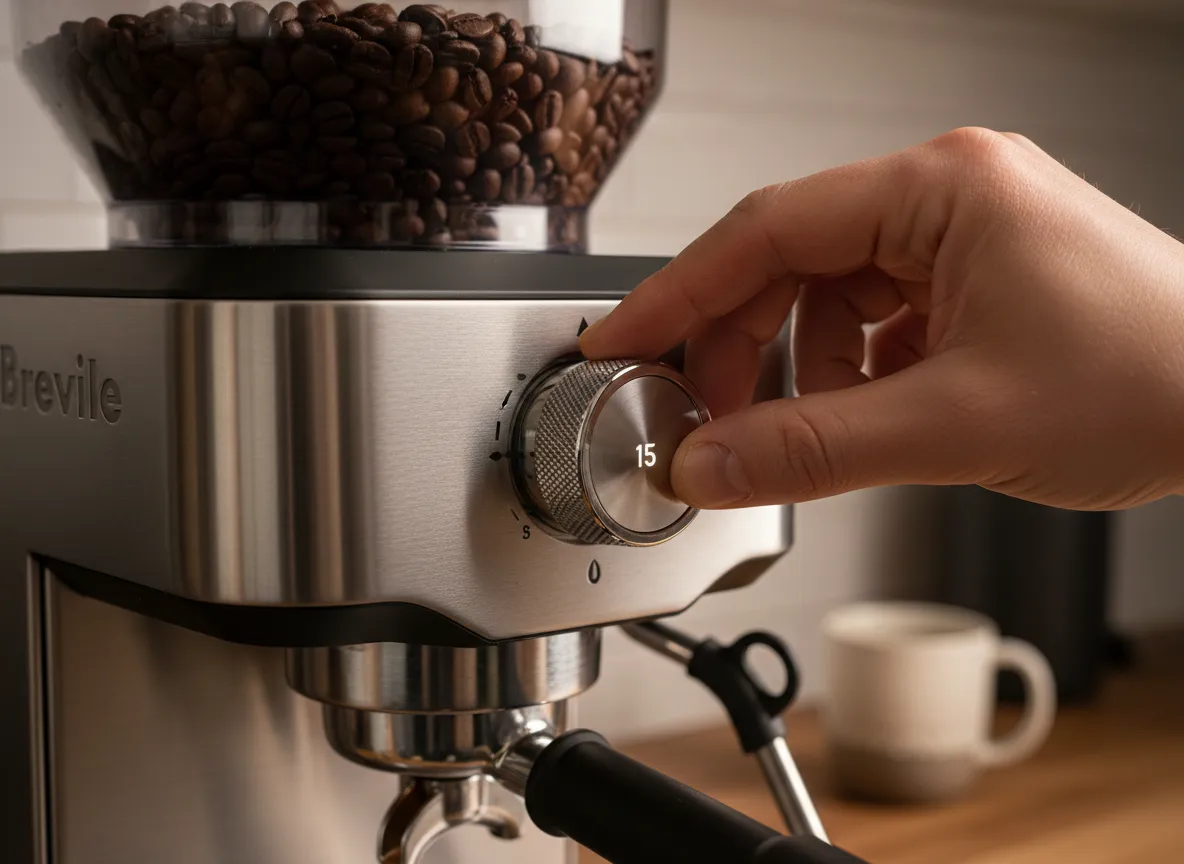
Your Breville Barista Pro features 30 precision grind settings with a stainless steel conical burr grinder [2][3], giving you incredible control over your coffee’s particle size. Here’s how to master this system:
Start with the baseline: Begin at setting 15 (middle range) and adjust from there. For espresso, you’ll typically work between settings 8-18, depending on your beans’ roast level and age.
Fresh vs. aged beans: Newer beans (roasted within 2-7 days) often require a coarser grind (higher numbers), while beans aged 2-4 weeks may need finer settings (lower numbers).
Taste and adjust: If your shot pulls too fast (under 25 seconds), go finer. If it takes longer than 35 seconds, go coarser. The sweet spot for most espresso shots is 25-30 seconds for a double shot.
Pro tip: Make only one adjustment at a time. Move just 1-2 settings and test before making further changes. This methodical approach prevents overshooting your target extraction.
2. Perfect Your Pre-Infusion Timing
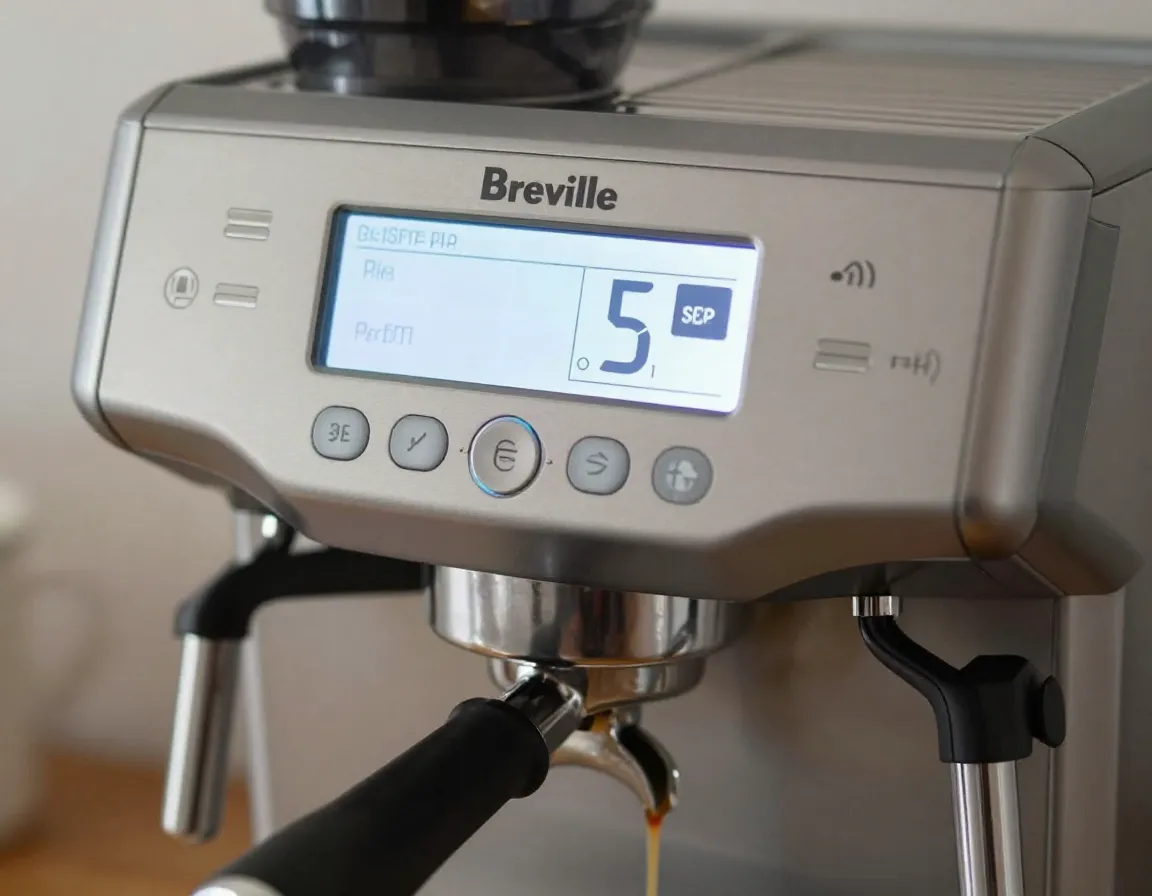
Breville ships machines with extended pre-infusion time, but experts recommend dialing it back to approximately 5 seconds for optimal extraction [3]. Here’s why this matters and how to adjust it:
Understanding pre-infusion: This low-pressure water application allows coffee grounds to bloom and expand before full pressure extraction begins. It’s crucial for even saturation and flavor development.
Adjusting the timing: Access your machine’s settings menu and reduce the pre-infusion time to 5 seconds. This prevents over-extraction while ensuring proper ground saturation.
Visual cues: During pre-infusion, you should see coffee beginning to drip slowly from the portafilter spouts. If no coffee appears, your grind might be too fine.
3. Master Volumetric Shot Control
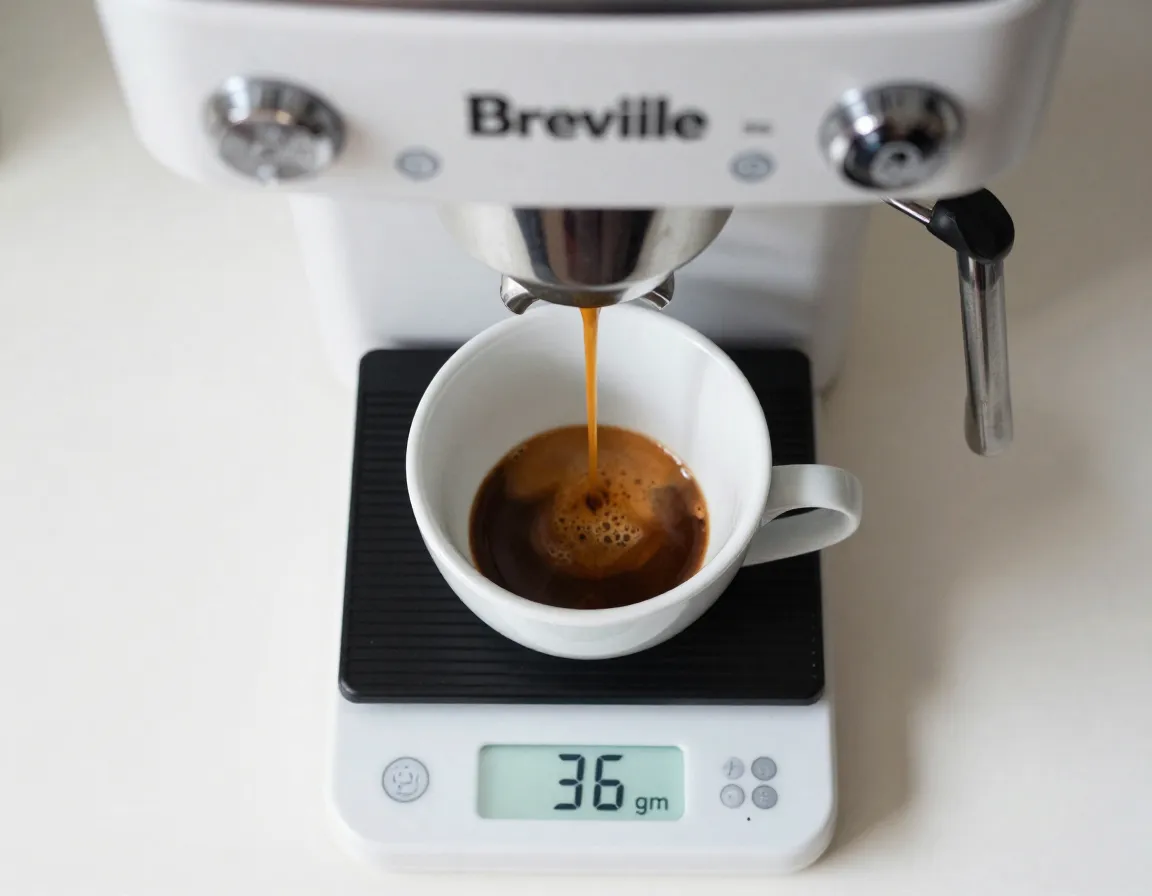
The integrated grinder uses volumetric shot control with preset options for 1 & 2 shots that can be adjusted to personal preference [2][4]. Customizing these settings ensures consistency every time:
Programming your shots:
- Single shot: Aim for 18-22ml output
- Double shot: Target 36-44ml output
- Timing: 25-30 seconds for optimal extraction
Calibration process: Place your cup on the scale, start extraction, and stop manually when you reach your target volume. The machine will remember this setting for future use.
Consistency is key: Once programmed, your machine will deliver the same volume every time, eliminating guesswork and ensuring repeatable results.
Advanced Brewing Techniques for Professional Results
4. Leverage the Dosing Funnel for Precision
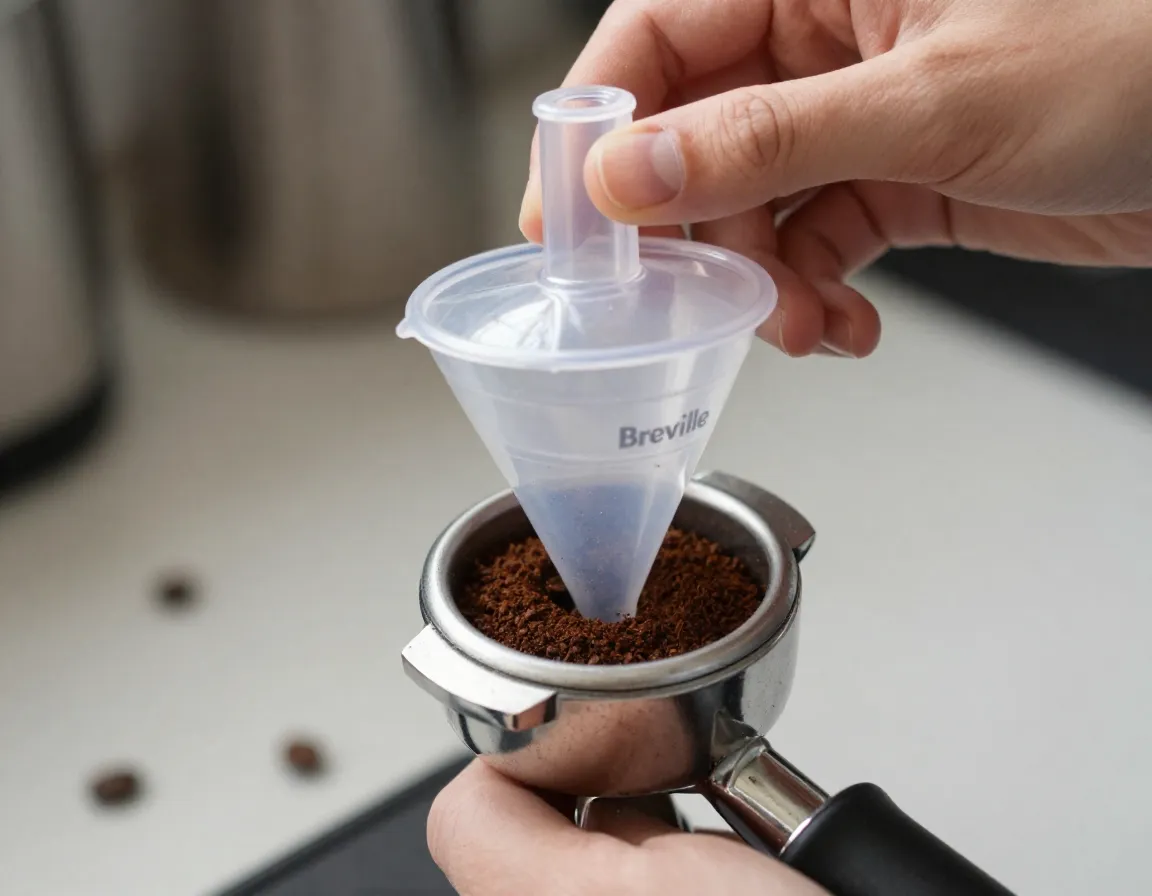
The Dosing Funnel™ attachment (included) reduces mess and waste during grinding and tamping [2]. Here’s how to use it like a pro:
Proper installation: Attach the dosing funnel to your portafilter before grinding. This creates a sealed system that prevents coffee grounds from scattering.
Even distribution: After grinding, gently tap the sides of the portafilter to settle grounds evenly. The funnel’s design helps create a level surface for tamping.
Removal technique: Twist the funnel slightly while lifting to prevent grounds from sticking to the rim. This ensures all your coffee makes it into the portafilter.
5. Perfect Your Tamping Technique
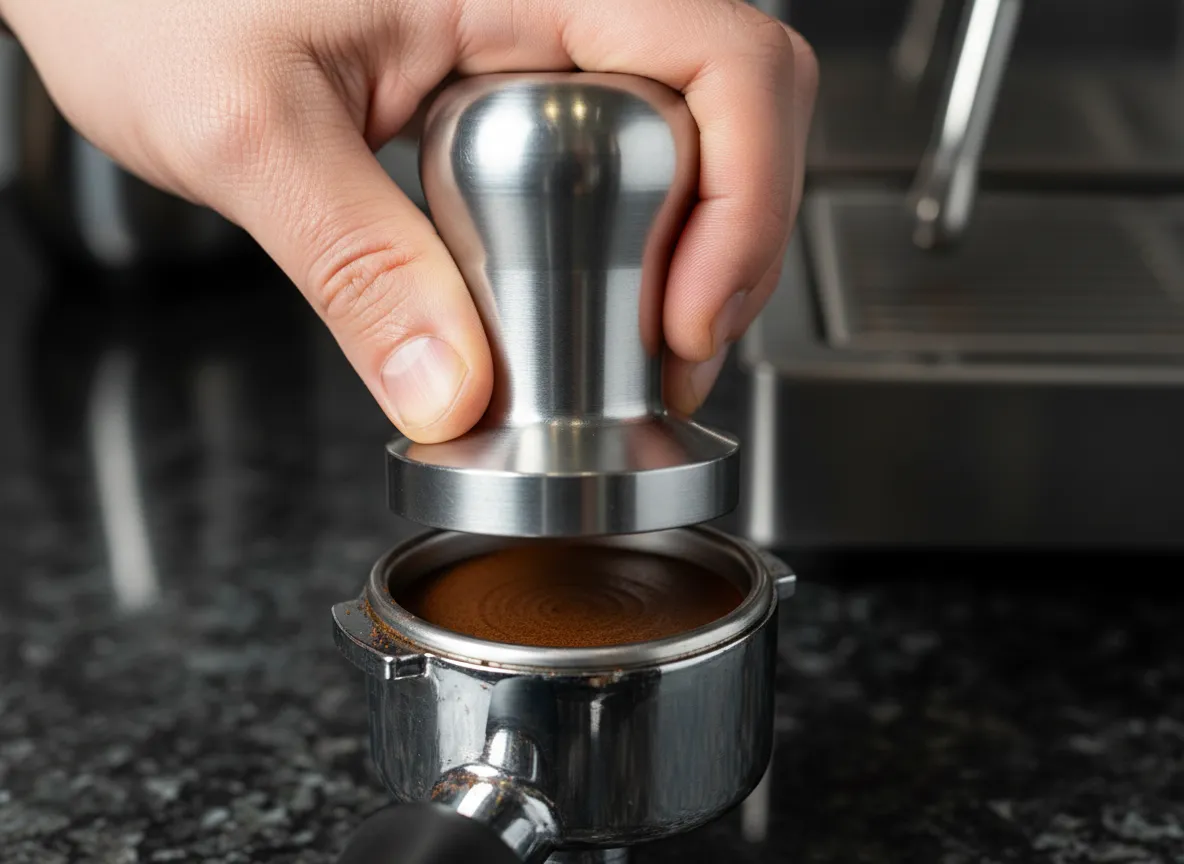
Consistent tamping pressure and technique are crucial for even extraction:
Pressure consistency: Apply approximately 30 pounds of pressure. Practice on a bathroom scale to develop muscle memory for this pressure level.
Level tamping: Ensure your tamper is perfectly level. An uneven tamp creates channels where water flows too quickly, leading to under-extraction.
Polish technique: After the main tamp, give a slight twist (polish) to smooth the surface. This creates an even bed for water distribution.
Temperature and Pressure Optimization
6. Utilize Temperature Precision for Different Coffee Types
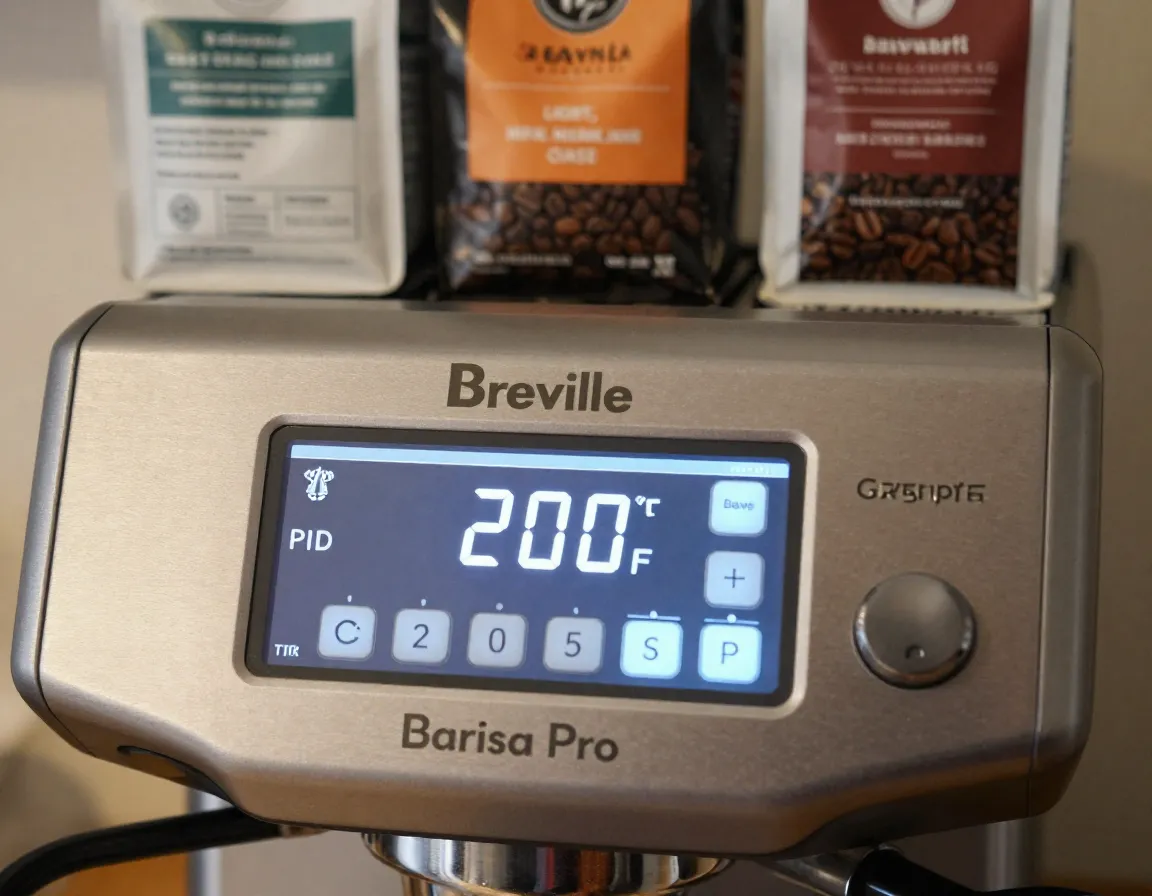
Your machine’s ±2°C precision temperature control [1][3] allows you to optimize brewing temperature for different coffee characteristics:
Light roasts: Use higher temperatures (200-205°F) to extract the complex flavors and acidity that light roasts offer.
Medium roasts: Stick with the standard range (195-200°F) for balanced extraction of sweetness and acidity.
Dark roasts: Lower temperatures (190-195°F) prevent over-extraction of bitter compounds while preserving the roast’s intended flavors.
Seasonal adjustments: Consider ambient temperature in your kitchen. Colder environments may benefit from slightly higher brewing temperatures.
7. Master the Manual Steam Wand
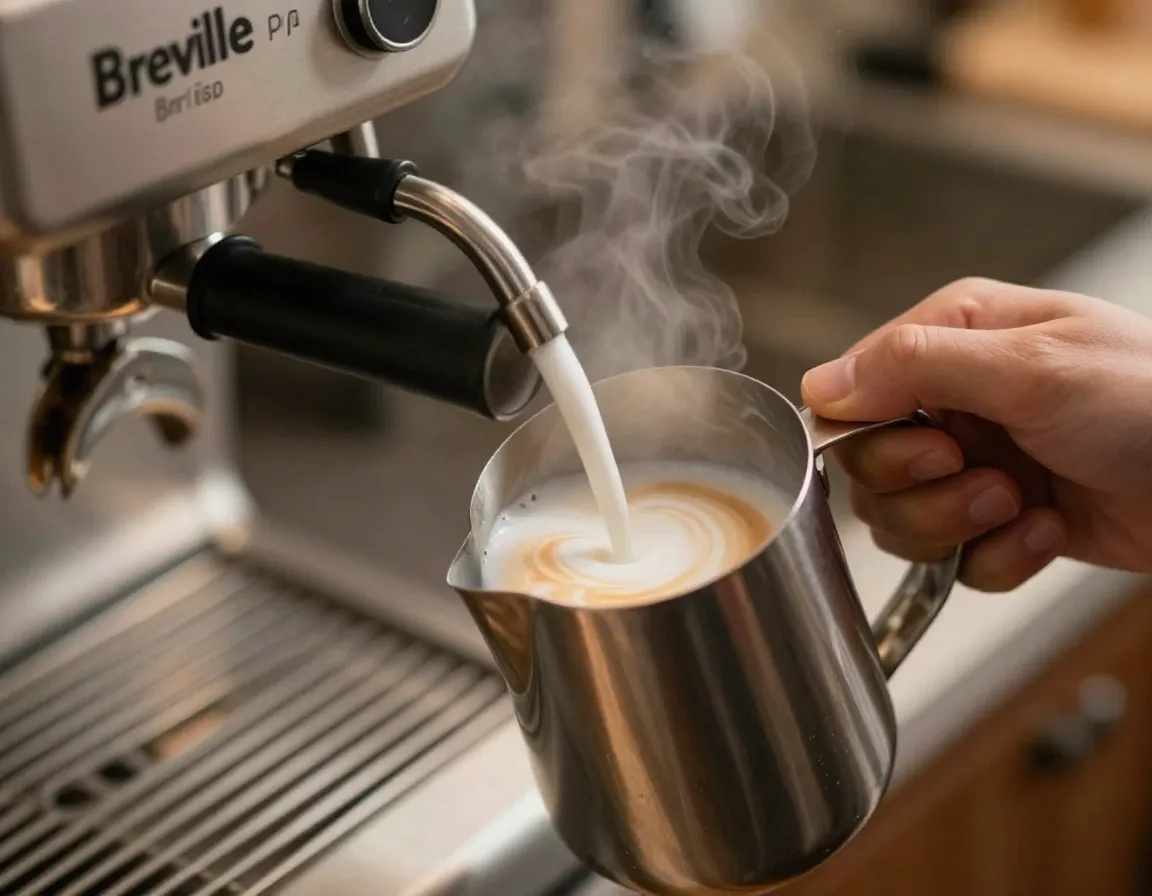
The manual steam wand allows for complete control over milk texture for latte art creation [4]. Here’s your step-by-step guide to professional-quality milk steaming:
Preparation phase:
- Use cold milk (35-40°F) in a clean, cold pitcher
- Fill pitcher to just below the spout (about 1/3 full for expansion room)
- Purge steam wand before use to remove any condensation
Texturing technique:
- Insert wand tip just below milk surface
- Turn on steam at full power
- Create microfoam by keeping tip near surface for first 5-10 seconds
- Listen for paper-tearing sound – this indicates proper foam creation
Heating phase:
- Plunge wand deeper into milk once you have desired foam amount
- Heat to 140-150°F (pitcher should be too hot to hold comfortably)
- Turn off steam before removing wand from milk
Finishing touches:
- Tap pitcher on counter to settle large bubbles
- Swirl milk to integrate foam with liquid
- Pour immediately for best results
Maintenance and Longevity Tips
8. Implement Proper Maintenance Protocols
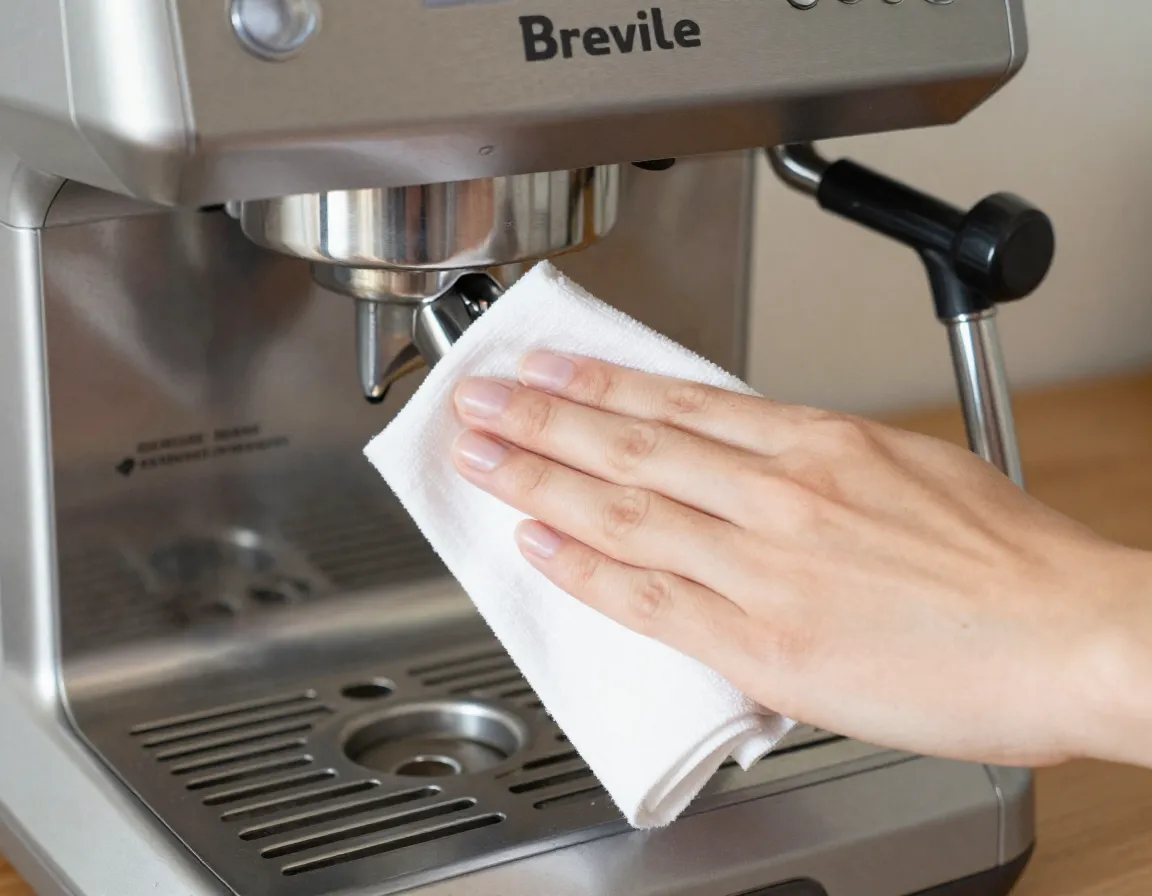
Your Breville Barista Pro includes on-screen maintenance prompts for simplified cleaning [4] and comes with a 2-year limited product warranty [1]. Following proper maintenance ensures optimal performance:
Daily maintenance:
- Wipe down exterior with damp cloth
- Empty and rinse drip tray
- Purge steam wand after each use
- Run blank shot to clear portafilter
Weekly deep cleaning:
- Remove and wash water tank with mild soap
- Clean portafilter and basket thoroughly
- Wipe down steam wand with damp cloth
- Empty and clean bean hopper
Water filter management:
The machine includes a water filter to reduce descaling frequency [3], but eventual filter replacement is necessary:
- Replace filter every 2-3 months or as prompted
- Use filtered or soft water to extend filter life
- Follow descaling schedule based on water hardness in your area
Monthly descaling:
- Use Breville’s descaling solution or white vinegar solution
- Follow on-screen prompts for automated descaling cycle
- Rinse thoroughly after descaling process
- Reset descaling counter in machine settings
Troubleshooting Common Issues
Even with proper technique, you might encounter some challenges. Here are solutions to common problems:
Sour-tasting espresso: Usually indicates under-extraction. Try a finer grind setting or increase brew temperature slightly.
Bitter espresso: Often caused by over-extraction. Use a coarser grind or reduce brew temperature.
Weak or watery shots: Check your dose weight (should be 18-20g for double shot) and ensure proper tamping pressure.
Inconsistent extraction: Verify grind consistency and check that your portafilter basket isn’t clogged with coffee oils.
Advanced Customization Options
Once you’ve mastered the basics, explore these advanced customization features:
Shot timing adjustments: Fine-tune your extraction time by adjusting grind size in small increments. Document your settings for different coffee beans.
Pressure profiling awareness: While the Barista Pro doesn’t offer manual pressure profiling, understanding how the built-in pre-infusion affects extraction helps you optimize timing.
Bean-specific profiles: Keep a coffee journal noting optimal settings for different beans, including grind size, dose weight, and extraction time.
Creating Your Perfect Coffee Routine
Developing a consistent routine ensures reproducible results:
Morning preparation checklist:
- Check water tank level and filter status
- Verify bean hopper has sufficient coffee
- Run blank shot to heat system
- Adjust grind setting if switching bean types
- Weigh your dose for consistency
Quality control measures:
- Use a scale for precise dosing
- Time your extractions
- Taste and adjust systematically
- Keep notes on successful combinations
Conclusion
Mastering your Breville Barista Pro espresso machine transforms your daily coffee ritual from routine to artistry. By implementing these 8 Pro Tips to Master Your Breville Barista Pro Espresso Machine, you’re equipped with professional-level knowledge to create exceptional coffee at home.
Remember that becoming proficient takes practice and patience. Start with one or two techniques, master them completely, then gradually incorporate additional skills. The journey from good to great coffee is iterative – each cup teaches you something new about your machine and your preferences.
Your next steps:
- Start tomorrow morning by implementing the grind optimization and pre-infusion timing adjustments
- Practice daily with the dosing funnel and tamping technique until they become second nature
- Dedicate weekend time to mastering the steam wand for café-quality milk beverages
- Schedule monthly maintenance to keep your machine performing at peak levels
With consistent application of these professional techniques, you’ll soon be creating espresso drinks that rival your favorite coffee shop – all from the comfort of your own kitchen. The investment in learning these skills pays dividends in every perfectly extracted shot and expertly textured cappuccino you create.
References
[1] Breville The Barista Pro Espresso Machine – https://cookswarehouse.com/breville-the-barista-pro-espresso-machine/
[2] Bes878 – https://www.breville.com/en-us/product/bes878
[3] Breville Barista Pro Review – https://www.coffeeness.de/en/breville-barista-pro-review/
[4] Best Breville Espresso Machine – https://www.businessinsider.com/guides/kitchen/best-breville-espresso-machine