
8 Essential Modules in a Comprehensive Coffee Shop Training Program
Picture this: You walk into your favorite coffee shop, and the barista greets you with confidence, crafts your drink with precision, and delivers an experience that keeps you coming back. Behind that seamless interaction lies hours of structured training that transforms coffee enthusiasts into skilled professionals. In 2026, the specialty coffee industry continues to evolve, making comprehensive training programs more crucial than ever for coffee shop success.

The 8 Essential Modules in a Comprehensive Coffee Shop Training Program form the backbone of professional coffee education, ensuring every team member develops the skills needed to excel in today’s competitive market. These modules, largely based on the internationally recognized Specialty Coffee Association (SCA) framework, provide a systematic approach to building expertise across all aspects of coffee service and preparation.
Key Takeaways
- Structured learning pathways progress from foundational concepts to advanced professional skills across eight core modules
- Hands-on training combines theoretical knowledge with practical application in real coffee shop environments
- Industry certification through SCA-aligned programs enhances credibility and career advancement opportunities
- Flexible scheduling allows coffee shops to implement training at Foundation, Intermediate, and Professional levels based on staff needs
- Comprehensive skill development covers everything from coffee origins to customer service, creating well-rounded coffee professionals
Understanding the Foundation: Why Comprehensive Training Matters
The specialty coffee industry has transformed dramatically over the past decade. Today’s customers expect more than just a caffeine fix – they want knowledgeable staff who can guide them through complex flavor profiles, brewing methods, and coffee origins. This shift has made comprehensive training programs essential for coffee shop success.
A well-structured training program serves multiple purposes. It reduces staff turnover by creating engaged, confident employees. It improves customer satisfaction through consistent service quality. Most importantly, it builds a strong coffee culture within your establishment that attracts both customers and top talent.
The SCA Coffee Skills Program provides the industry standard framework that many successful coffee shops adopt. This modular system allows businesses to customize training based on their specific needs while ensuring all staff members receive comprehensive education in coffee fundamentals [2].
The Complete Framework: 8 Essential Modules in a Comprehensive Coffee Shop Training Program
1. Introduction to Coffee: Building the Foundation
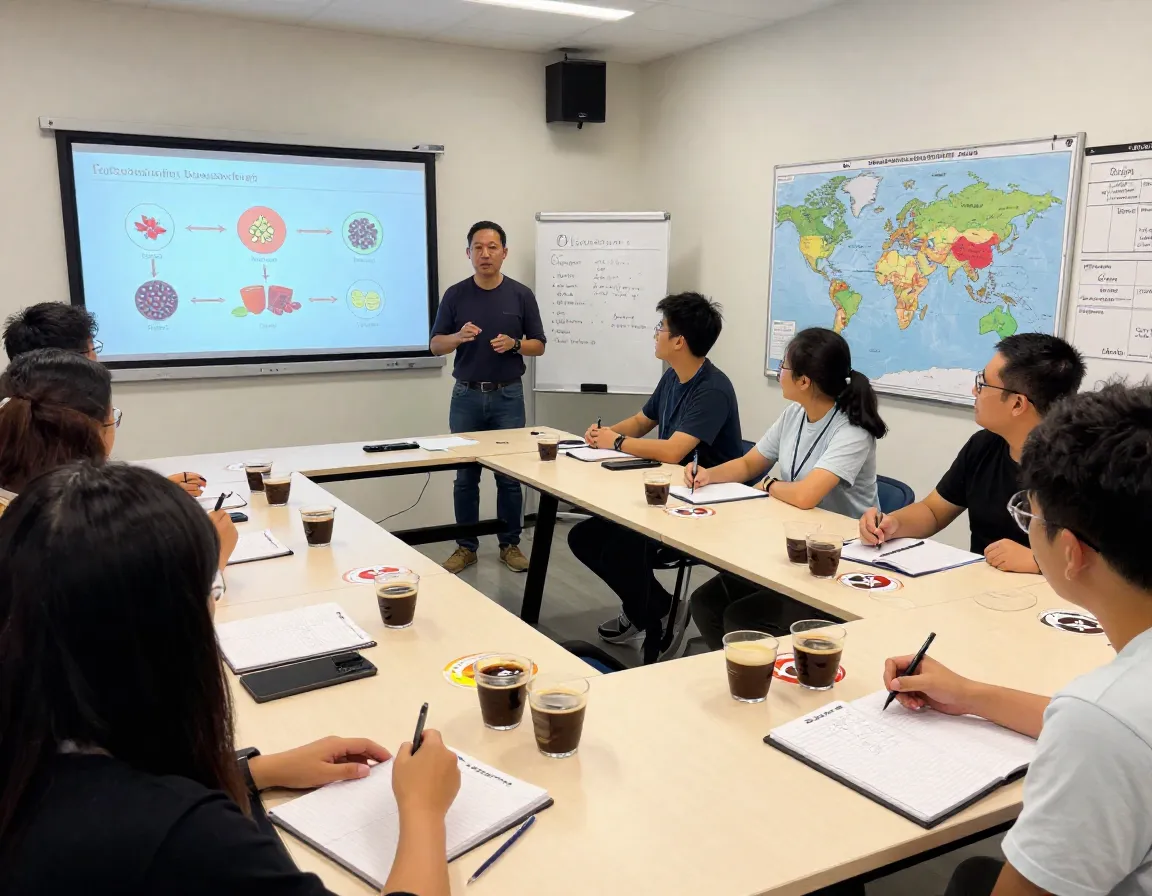
Every comprehensive coffee shop training program begins with a solid introduction to coffee fundamentals. This 4-6 hour foundational module covers coffee’s complete journey from farm to cup, providing essential context for all subsequent learning [2].
Key Learning Objectives:
- Understanding coffee’s agricultural origins and global production
- Basic brewing principles and extraction science
- Introduction to sensory evaluation techniques
- Coffee industry terminology and standards
This module establishes the knowledge baseline that supports all other training areas. Staff learn about different coffee-growing regions, processing methods, and how these factors influence flavor profiles. The sensory basics introduced here prepare trainees for more advanced cupping and tasting skills they’ll develop later.
Training Format: Typically delivered as an interactive workshop combining presentations, tastings, and hands-on demonstrations. Many programs include visual aids showing coffee processing stages and world coffee maps to reinforce geographic knowledge.
2. Barista Skills: Mastering the Craft
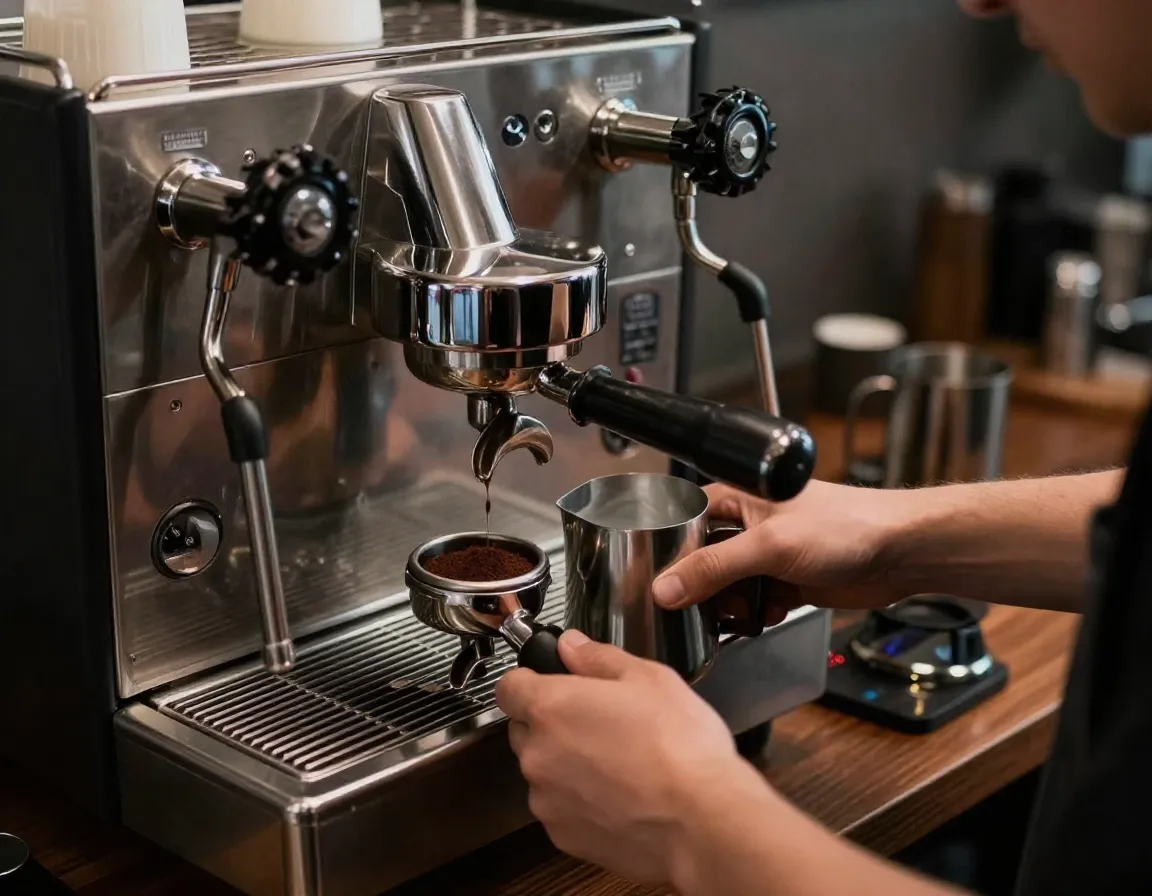
The Barista Skills module represents the heart of most coffee shop operations. This comprehensive training covers espresso preparation, milk steaming, latte art, and efficient coffee bar workflow management [2].
Foundation Level (7 hours) focuses on:
- Proper espresso extraction techniques
- Basic milk steaming and texturing
- Simple latte art patterns
- Health and safety protocols
- Customer service fundamentals
Intermediate and Professional levels advance to complex latte art, advanced brewing parameters, and training others. The progressive structure allows coffee shops to develop baristas from entry-level to expert over time [2].
“Barista skills training transforms coffee preparation from a task into an art form, creating consistency and excellence in every cup.”
Practical Applications:
- Hands-on practice with commercial espresso equipment
- Workflow optimization exercises
- Quality control procedures
- Customer interaction scenarios
This module includes written assessments with 20 questions at the Foundation level, ensuring theoretical understanding supports practical skills [4].
3. Brewing Methods: Expanding Coffee Horizons
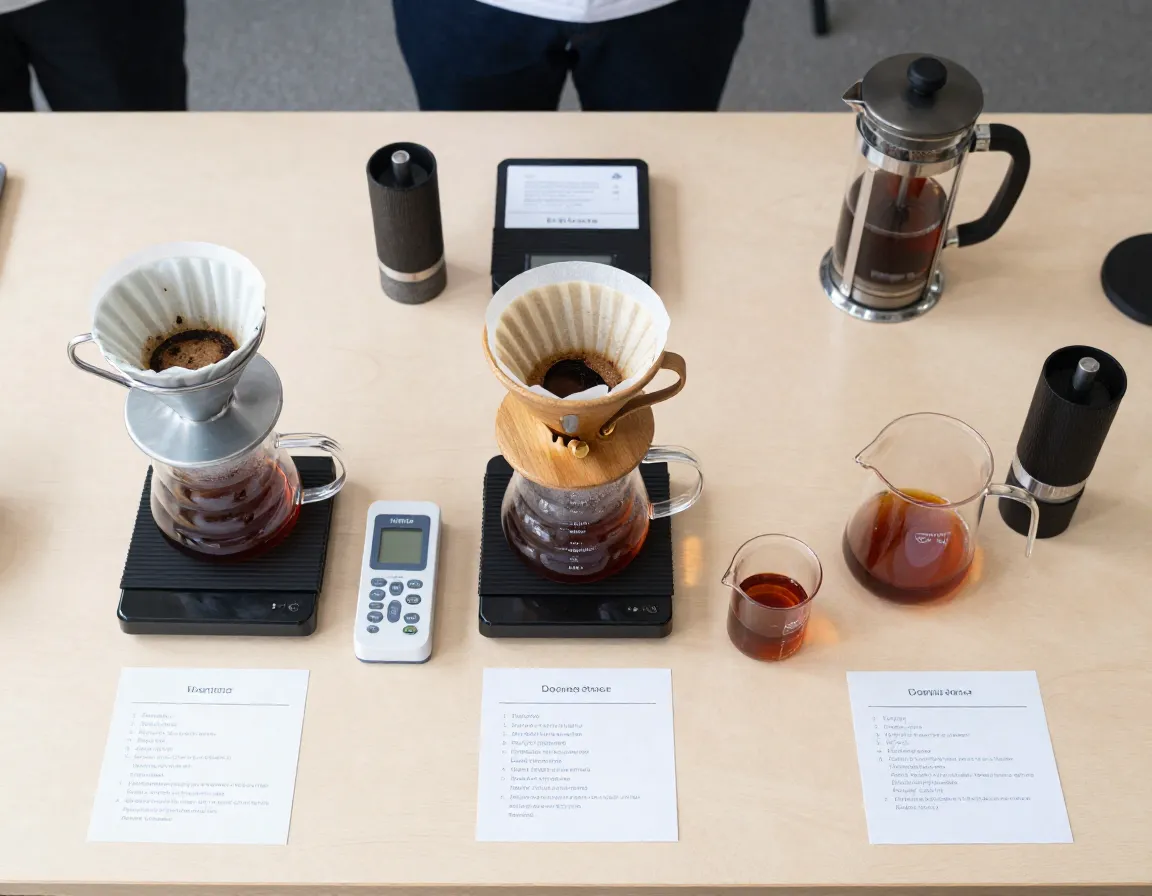
Modern coffee shops often offer multiple brewing methods beyond espresso. The Brewing module equips staff with expertise in pour-over, French press, cold brew, and other manual brewing techniques [2].
Core Competencies Include:
- Water quality assessment and control
- Grind size optimization for different methods
- Extraction measurement and adjustment
- Brewing ratio calculations
- Equipment maintenance procedures
This training is particularly valuable for specialty coffee shops that want to differentiate themselves through diverse brewing offerings. Staff learn to match brewing methods to specific coffee characteristics and customer preferences.
Advanced Skills Development:
- Refractometer usage for measuring extraction
- Recipe development and documentation
- Troubleshooting common brewing problems
- Equipment calibration techniques
4. Green Coffee: Understanding Origins and Quality
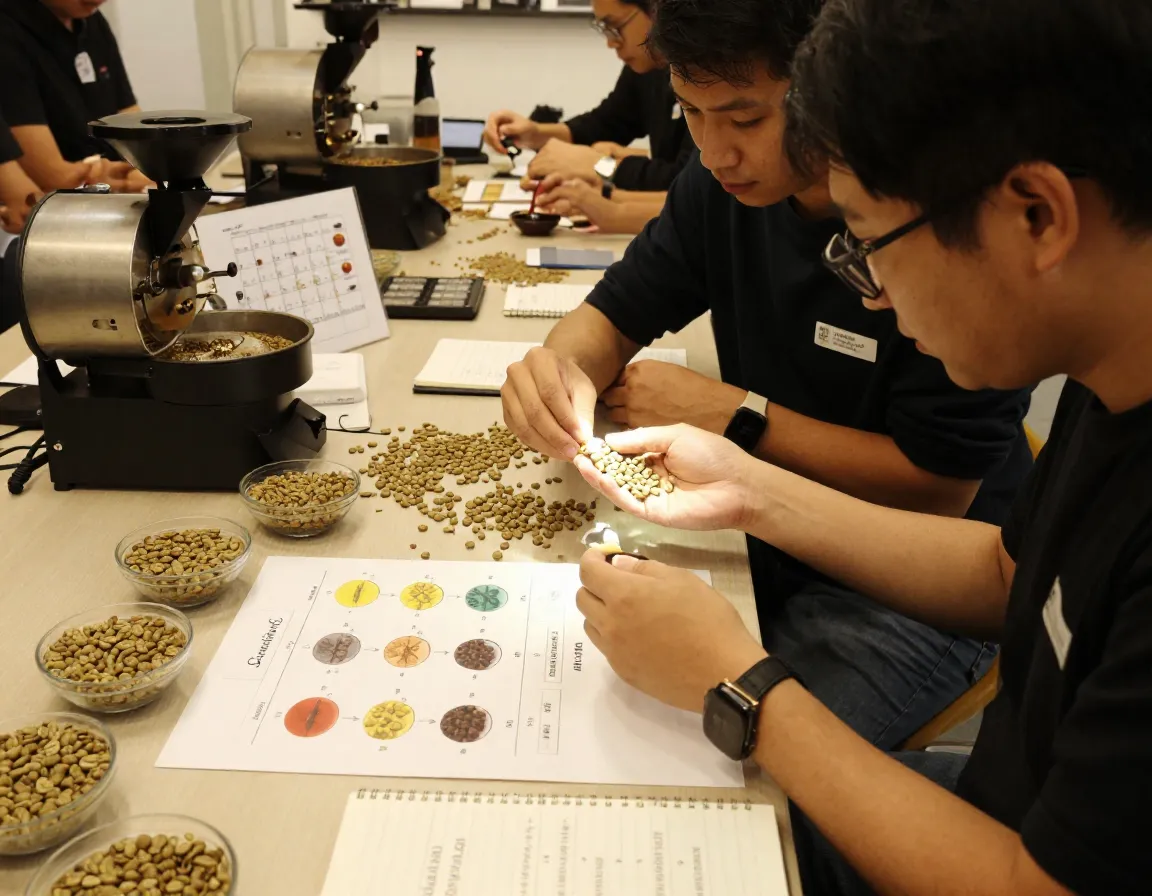
The Green Coffee module provides deep insight into coffee evaluation, processing methods, and market dynamics [2]. This knowledge enables staff to communicate effectively about coffee origins and quality factors with customers.
Training Components:
- Coffee grading and classification systems
- Processing method impacts on flavor
- Seasonal availability and sourcing
- Quality assessment techniques
- Market pricing factors
Staff who complete this module can confidently discuss coffee origins, explain seasonal menu changes, and help customers understand why certain coffees command premium prices. This knowledge significantly enhances the customer experience and supports higher-value sales.
5. Roasting: From Green to Brown
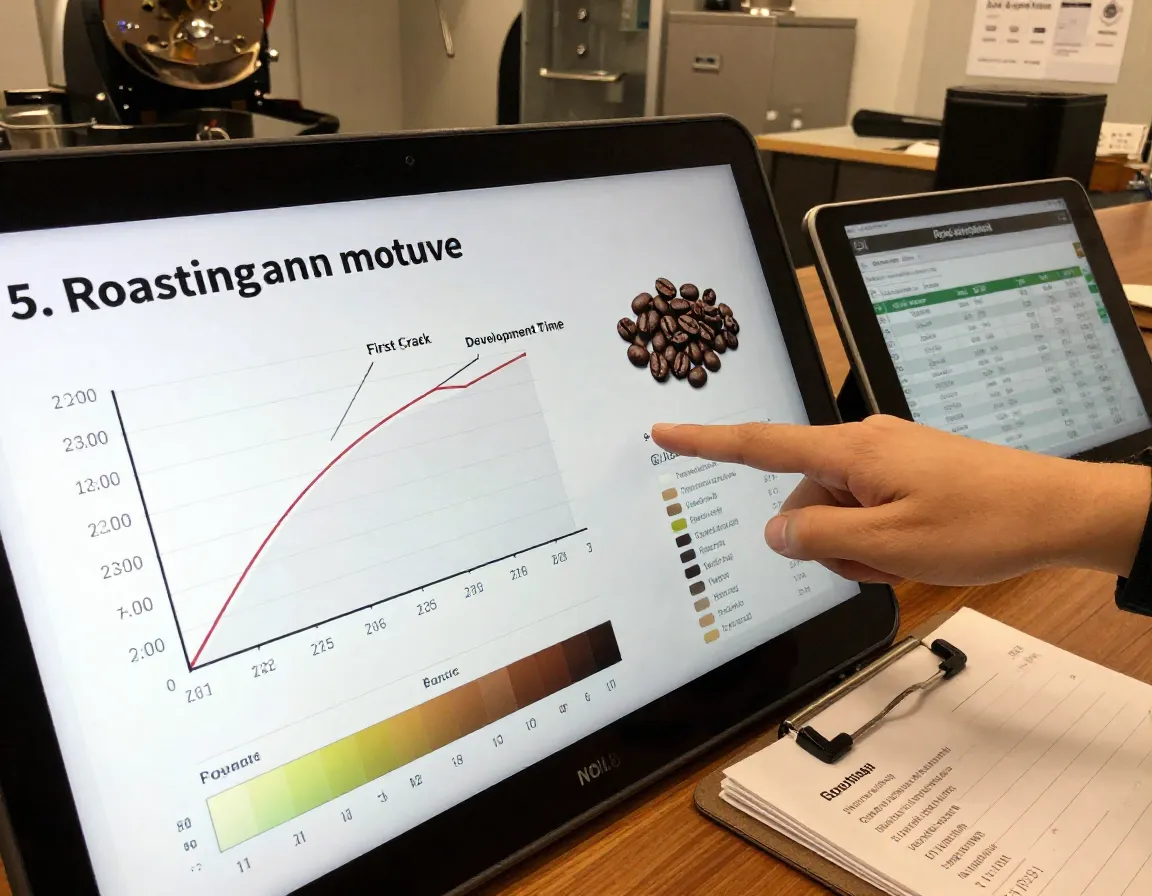
While not all coffee shops roast their own beans, understanding the Roasting module helps staff appreciate how roast profiles affect flavor and brewing parameters [2].
Key Learning Areas:
- Roast profile development
- Equipment operation basics
- Production planning and management
- Quality control during roasting
- Storage and packaging considerations
Even for shops that purchase roasted coffee, this knowledge helps staff explain flavor characteristics to customers and make informed brewing adjustments based on roast levels.
6. Sensory Skills: Developing Professional Palates
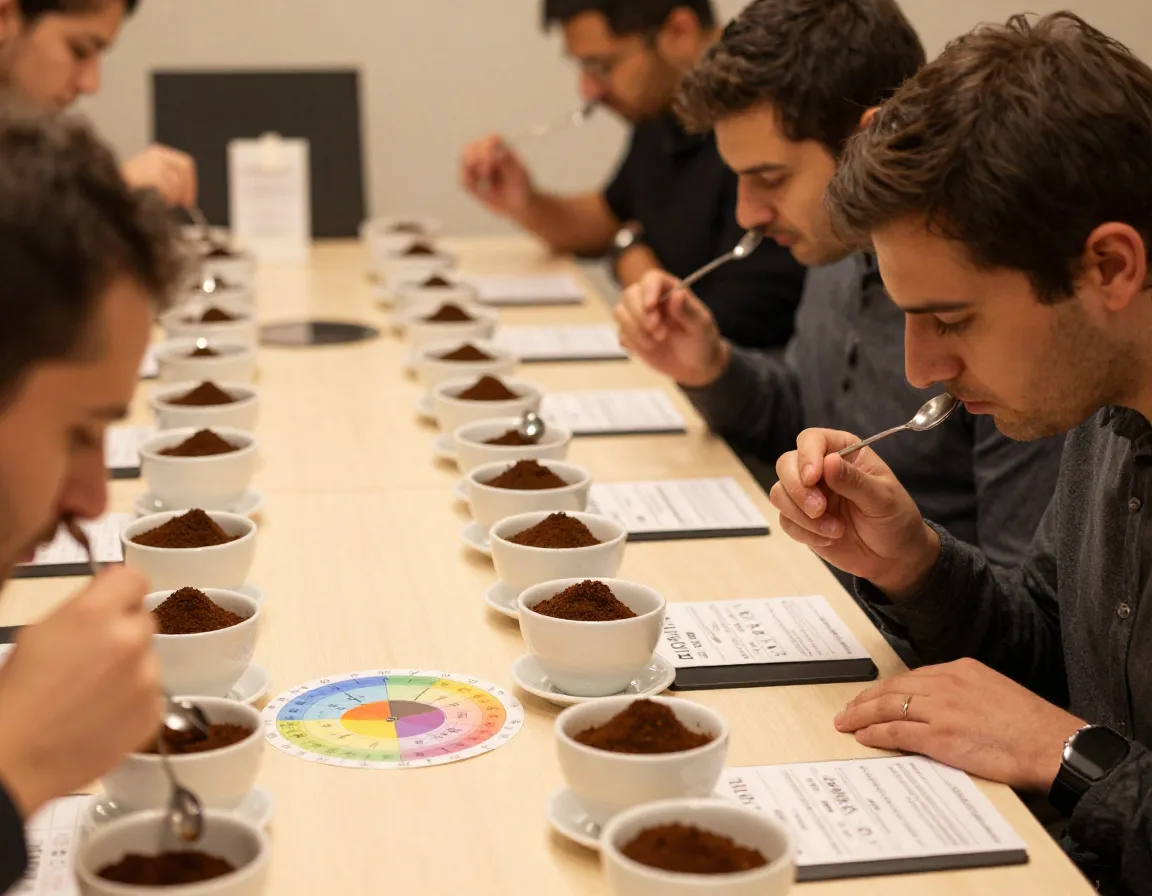
The Sensory Skills module develops systematic approaches to coffee tasting, cupping protocols, and tasting program implementation [2]. This training creates a common language for discussing coffee quality and characteristics.
Progressive Skill Development:
- Basic taste identification and calibration
- Professional cupping procedures
- Flavor wheel utilization
- Defect identification
- Tasting note documentation
These skills enable staff to quality-check daily coffee offerings, identify potential issues before they reach customers, and provide detailed flavor descriptions that enhance the customer experience.
7. Customer Service Excellence

While technical coffee skills form the foundation, exceptional customer service differentiates successful coffee shops. This module focuses on creating positive customer experiences through effective communication, problem-solving, and relationship building.
Training Elements:
- Active listening techniques
- Product recommendation strategies
- Handling difficult situations
- Building customer loyalty
- Upselling and cross-selling approaches
Scenario-Based Learning:
Staff practice handling various customer situations, from explaining brewing methods to managing complaints. Role-playing exercises build confidence and ensure consistent service standards across all team members.
8. Business Operations and Safety
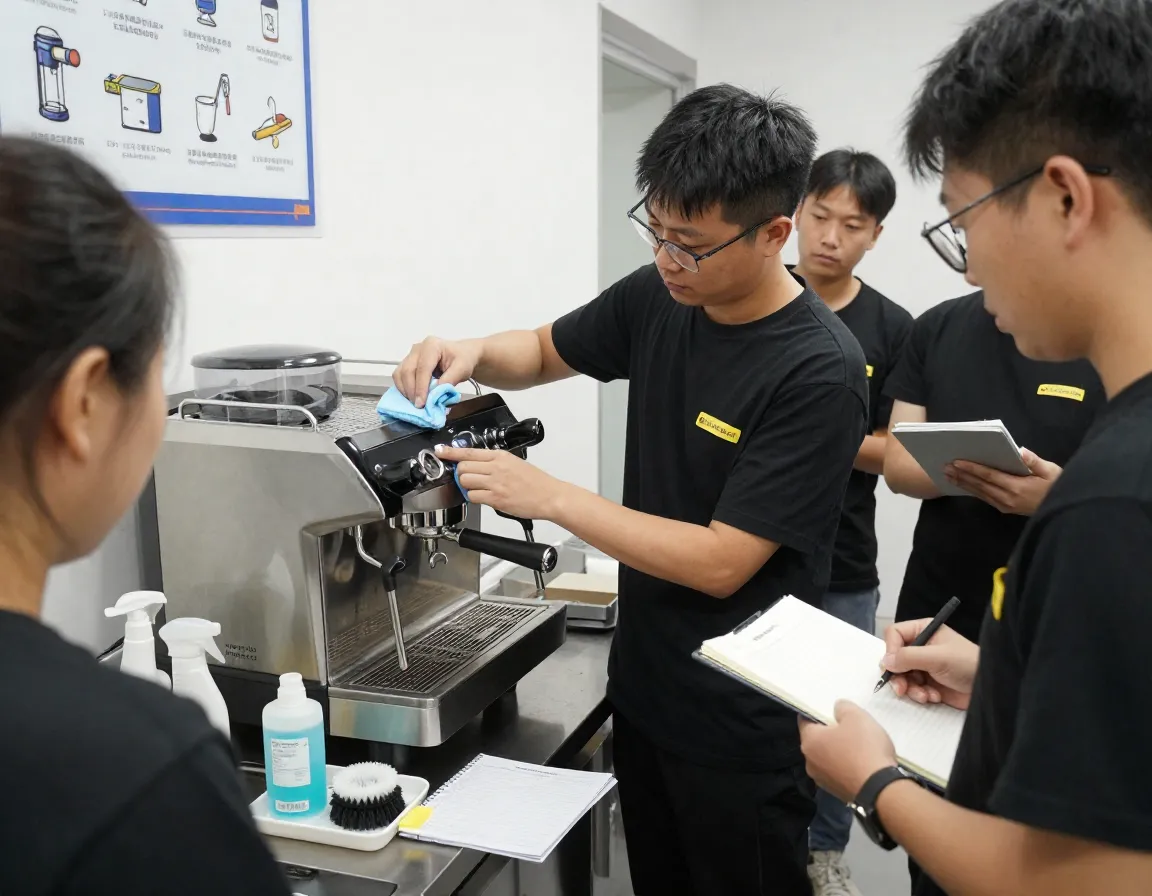
The final module covers essential operational knowledge that every coffee shop employee needs. This includes health and safety protocols, inventory management, equipment maintenance, and basic business understanding.
Critical Areas:
- Food safety and hygiene standards
- Equipment cleaning and maintenance schedules
- Inventory tracking and waste reduction
- Cash handling and POS systems
- Emergency procedures
Compliance and Standards:
This training ensures all staff understand regulatory requirements, maintain consistent operational standards, and contribute to efficient business operations.
Implementation Strategies for Coffee Shop Owners
Successfully implementing the 8 Essential Modules in a Comprehensive Coffee Shop Training Program requires careful planning and resource allocation. The SCA framework’s flexible, self-paced learning pathway allows coffee shops to adapt training to their specific needs and constraints [2].
Scheduling Considerations:
- Foundation courses require no prerequisites, though SCA Introduction to Coffee is recommended [4]
- Modules can be completed in any order based on business priorities
- Progressive levels (Foundation, Intermediate, Professional) allow skill development over time
- Training can be scheduled during slower business periods to minimize operational impact
Resource Requirements:
- Dedicated training space with appropriate equipment
- Qualified instructors or partnerships with certified training providers
- Training materials and assessment tools
- Budget allocation for staff time and certification fees
Many coffee shops partner with certified SCA training providers to ensure high-quality instruction and valid certifications. This approach often proves more cost-effective than developing internal training capabilities, especially for smaller operations [1][6].
Measuring Training Effectiveness
Successful training programs include robust measurement and evaluation components. The SCA framework provides standardized assessments that ensure consistent skill development across different training providers and locations.
Assessment Methods:
- Written examinations testing theoretical knowledge
- Practical skill demonstrations
- Customer feedback monitoring
- Sales performance tracking
- Staff retention and satisfaction surveys
Continuous Improvement:
Regular program evaluation helps identify areas for enhancement and ensures training remains relevant to evolving industry standards and customer expectations.
Return on Investment: The Business Case for Comprehensive Training
Investing in comprehensive staff training delivers measurable returns through multiple channels. Reduced turnover costs, improved customer satisfaction, and increased sales per transaction typically offset training investments within the first year.
Financial Benefits:
- Lower recruitment and onboarding costs
- Reduced product waste through improved skills
- Higher average transaction values
- Improved customer retention rates
- Enhanced brand reputation and word-of-mouth marketing
Competitive Advantages:
Well-trained staff create differentiated customer experiences that justify premium pricing and build customer loyalty. In an increasingly competitive market, comprehensive training becomes a crucial competitive advantage.
Conclusion
The 8 Essential Modules in a Comprehensive Coffee Shop Training Program provide a proven framework for developing skilled, confident coffee professionals who deliver exceptional customer experiences. By implementing structured training based on industry standards, coffee shop owners invest in their most valuable asset – their people.
Take Action Today:
- Assess your current training gaps by evaluating staff skills against the eight module framework
- Research certified training providers in your area or explore online SCA-aligned programs
- Develop an implementation timeline that balances training needs with operational requirements
- Allocate budget resources for training materials, instructor fees, and staff time
- Establish measurement systems to track training effectiveness and return on investment
The specialty coffee industry continues evolving, but one constant remains: well-trained staff are the foundation of successful coffee businesses. Start building your comprehensive training program today, and watch as your investment in education transforms into improved performance, customer satisfaction, and business growth.
Remember, great coffee shops aren’t just about great coffee – they’re about great people who know how to share their passion and expertise with every customer who walks through the door.
References
[1] Sca Barista Module Coffee Skills Program – https://bootcoffee.com/sca-barista-module-coffee-skills-program/
[2] Coffee Skills Program – https://education.sca.coffee/coffee-skills-program
[3] Certified Coffee Professional – https://coffeeacademy.fiu.edu/product/certified-coffee-professional/
[4] Sca Barista Skills Course – https://alignedcoffee.com/shop/scacourses/sca-barista-skills-course/
[5] Training – https://www.klatchcoffee.com/pages/training
[6] Sca Classes – https://redroosterwholesale.com/pages/sca-classes